







The Brain Was Never Built to Think. It Was Built to Predict.

Table of contents
There is an uncomfortable possibility emerging from modern neuroscience that has yet to become part of mainstream conversations about cognitive performance. It suggests that the brain’s primary function is not thinking, reasoning, remembering, or even consciousness itself. Those remarkable abilities may simply be consequences of a far older responsibility: keeping the body alive by predicting what will happen next.
This idea is profoundly different from the way most of us have been taught to understand the mind. We tend to imagine the brain as an advanced computer that receives information, processes it, and produces thoughts, decisions, and actions. In reality, much of what the brain does occurs before conscious awareness ever enters the picture. Rather than reacting to the world, it spends every waking moment constructing predictions about it, continuously estimating what the body will need seconds, minutes, or even hours before those demands actually arrive.
That distinction may sound subtle, but it changes almost everything. If the brain is fundamentally a prediction engine, then focus, motivation, fatigue, creativity, and emotional resilience cannot simply be understood as isolated mental states. They become reflections of how confidently the nervous system believes it can navigate the future without placing the organism at unacceptable biological risk.
For decades, the human optimization industry has largely pursued one objective: increasing output. We have searched for stronger stimulants, more efficient routines, faster learning techniques, and increasingly sophisticated nootropics, often assuming that cognitive performance is something that can be forced into existence through enough discipline or chemistry. Yet the emerging evidence suggests that performance is constrained less by how much energy we possess than by how willing the brain is to spend it.
The question is no longer, How can I make my brain work harder? The more interesting question is, What conditions persuade my brain that it is safe to perform at its highest level?

Prediction Is the Brain’s Native Language
Imagine standing up from a chair. It feels effortless because it is familiar, but the act itself is astonishingly complex. Before your muscles contract, your heart has already adjusted its rhythm, your blood vessels have begun redistributing pressure, your breathing subtly changes, and countless neural circuits prepare for movement. None of this happens because the body is reacting after you stand. It happens because the brain has already predicted that you are about to stand and has prepared the organism accordingly.
Neuroscientists describe this anticipatory regulation as allostasis, a concept that differs fundamentally from the more familiar idea of homeostasis. Homeostasis restores balance after change has occurred. Allostasis attempts to prevent imbalance before it happens. Rather than waiting for the organism to experience a shortage of energy or a physiological disturbance, the brain continuously forecasts future demands and allocates resources in advance.
This predictive strategy is extraordinarily efficient, but it also introduces an important consequence. Every prediction carries uncertainty. The brain must constantly estimate whether its forecasts are accurate enough to justify spending valuable biological resources. If uncertainty increases, the nervous system often becomes more conservative, not because it lacks energy, but because it becomes less confident about future conditions.
Viewed through this lens, cognition begins to resemble economics rather than engineering. The brain is not simply generating thoughts. It is managing a biological budget.
The Hidden Sense That Most People Never Learn About
Human beings grow up believing they possess five senses, yet neuroscience now recognizes another system that may be equally important for understanding the mind: interoception.
Interoception refers to the continuous perception and interpretation of signals originating inside the body. Heart rate, respiration, blood pressure, blood glucose, immune activity, body temperature, digestive function, muscular tension, and inflammatory processes all contribute to an ongoing stream of internal information. Most of this information never reaches conscious awareness, but it profoundly influences the decisions the brain makes every second.
The remarkable aspect of interoception is that the brain does not simply observe these signals. It predicts what those signals should look like and then compares expectation with reality. Every discrepancy becomes information that can strengthen or weaken the brain’s confidence in its internal model of the organism.
This means that the quality of your subjective experience is influenced not only by what is happening inside your body, but also by how accurately your brain anticipated those events. Two individuals can experience remarkably similar physiological states while interpreting them in completely different ways because their brains are operating from different predictive models.
The implication is profound. Performance is not determined solely by biology. It is determined by biology interpreted through prediction.
Fatigue May Be More Than Running Out of Energy
Most people think of fatigue as evidence that the body has exhausted its resources. Certainly, inadequate sleep, illness, prolonged exertion, and poor nutrition all reduce physiological capacity. However, these explanations do not fully account for one of the most familiar human experiences: the sudden disappearance of fatigue when something truly important happens.
An exhausted parent hears a child cry and immediately becomes alert. An athlete discovers unexpected strength during the final moments of competition. A scientist who has struggled to concentrate for hours suddenly enters an effortless state of deep focus after recognizing the solution to a difficult problem.
If energy alone determined performance, these moments should not occur.
Increasingly, researchers are exploring the possibility that fatigue also represents a prediction. Rather than merely signaling depleted fuel, it may reflect the brain’s estimate that continuing to invest resources carries an unacceptable degree of uncertainty. Fatigue, in other words, may function partly as a protective strategy designed to preserve long-term stability rather than maximize short-term output.
This interpretation does not diminish the reality of fatigue. Quite the opposite. It suggests that the feeling itself deserves to be understood more carefully. Sometimes the body truly requires recovery. At other times, the brain may simply be acting on an increasingly conservative prediction about future cost.
Learning to distinguish between those two situations may become one of the defining skills of high performance.
Why Modern Life Constantly Overloads the Predictive Brain
Our ancestors certainly encountered danger, but most dangers eventually resolved. A storm passed. A hunt ended. A conflict concluded. The nervous system could update its predictions and return to relative stability.
Modern life rarely offers that luxury.
Emails remain unanswered. Notifications interrupt every task. News cycles produce continuous uncertainty. Digital platforms encourage perpetual comparison. Professional responsibilities increasingly lack clear boundaries, and even leisure has become saturated with information competing for attention.
From the perspective of the predictive brain, these conditions create a unique challenge. Every unresolved message, unfinished task, or uncertain outcome forces the nervous system to continue updating its internal model. The brain remains occupied not because the work itself is necessarily difficult, but because prediction never reaches completion.
This may explain why ambiguity often feels more exhausting than effort. A demanding project with clear objectives can generate remarkable focus, while a relatively simple task interrupted dozens of times may leave a person mentally depleted. The difference is not always the amount of work being performed. It is the number of unresolved predictions the brain is attempting to manage simultaneously.
In many respects, modern exhaustion may be less a crisis of energy than a crisis of unfinished expectations.
Rethinking Cognitive Enhancement
The earliest wave of biohacking approached the brain much like an engine. If performance declined, the solution was assumed to be more stimulation, more discipline, or greater intensity. While such interventions can certainly have value, they often overlook a more fundamental reality: no nervous system performs well when it believes the future has become increasingly unpredictable.
The next generation of human optimization may therefore become less interested in overriding biology and more interested in improving the conditions under which biology naturally performs well. Sleep quality, metabolic health, stress regulation, movement, nutrition, and recovery cease to be peripheral lifestyle habits. They become variables that directly influence the brain’s predictive confidence.
Rather than asking how to silence internal signals, the more intelligent question becomes how to interpret them with greater accuracy. The goal shifts from forcing the nervous system into higher output toward creating an environment in which the brain no longer feels compelled to hold resources in reserve.
That is not simply a different strategy.
It is a different philosophy of performance.

How WUKIYO Approaches Human Performance
If the brain is continuously evaluating whether the body can safely sustain future demands, then supporting cognitive performance requires more than temporarily increasing stimulation. It requires respecting the biological architecture from which attention, resilience, learning, and decision-making naturally emerge.
This philosophy guides every formulation developed by WUKIYO.
WUKIYO | esse was designed as a comprehensive cognitive foundation, combining carefully selected nutrients, phospholipids, amino acids, botanical extracts, and functional compounds chosen to support multiple aspects of brain physiology rather than targeting a single mechanism in isolation. Instead of treating focus as something that can simply be switched on, esse reflects the understanding that sustained mental performance emerges from well-supported biological systems.
For many people, coffee already represents the first cognitive ritual of the day. WUKIYO | onyx builds upon that habit by pairing premium organic Arabica coffee with functional mushrooms and adaptogenic botanicals, creating an approach that values thoughtful formulation over simple stimulation. The intention is not merely to wake the mind, but to elevate an everyday ritual into one that aligns more closely with long-term cognitive well-being.
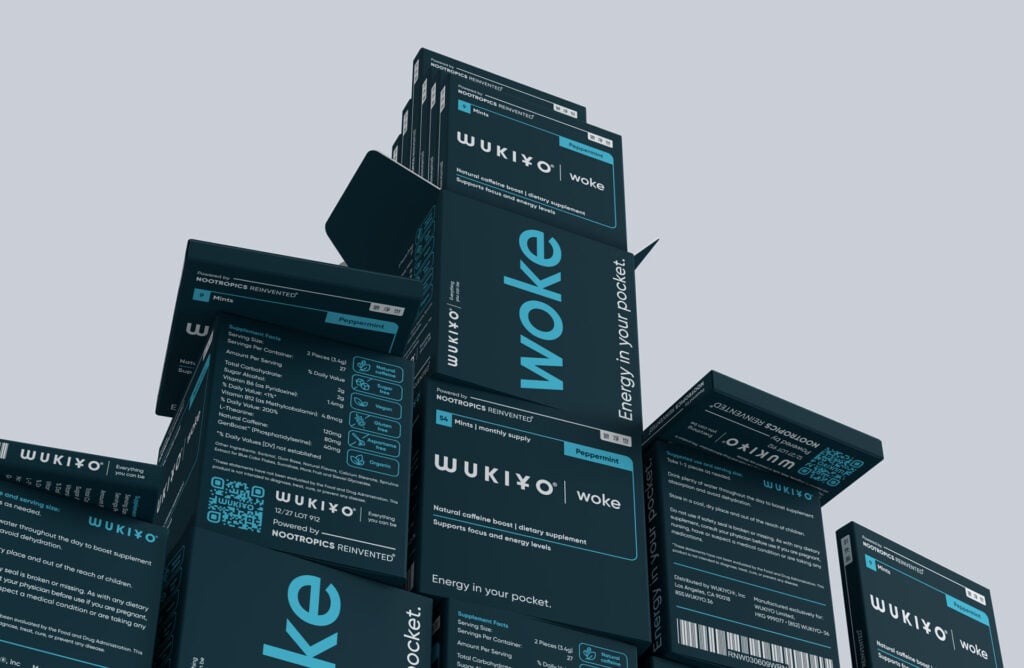
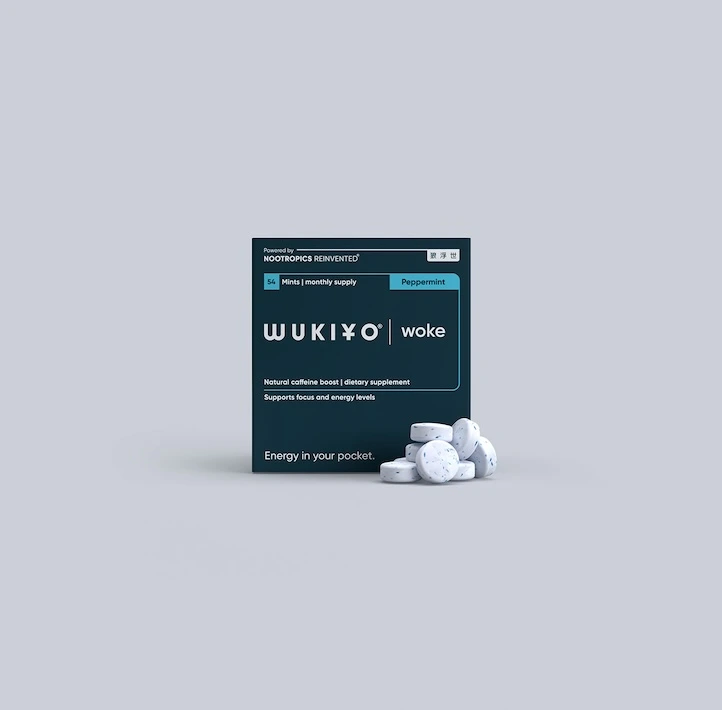
When circumstances genuinely demand heightened alertness, WUKIYO | woke combines naturally sourced caffeine with complementary ingredients selected to encourage a more balanced stimulation profile. The objective is not intensity for its own sake, but energy directed toward purposeful attention.
No supplement can replace restorative sleep, meaningful movement, emotional resilience, or intelligent recovery. Those remain the foundations upon which every optimized nervous system is built. Thoughtfully designed formulations should therefore be viewed not as shortcuts, but as tools that support an already well-constructed biological system.
That distinction is central to the WUKIYO philosophy.
A Different Way to Think About Performance
The most valuable realization emerging from predictive neuroscience may also be the simplest.
Your brain is not withholding performance because it is lazy.
It is withholding performance whenever it predicts that doing otherwise would compromise the stability of the organism it exists to protect.
Seen through that perspective, optimization becomes something far more sophisticated than chasing endless productivity. It becomes the ongoing practice of creating conditions in which the nervous system develops greater confidence in its own predictions. A confident brain spends resources differently. It tolerates uncertainty more effectively, directs attention more precisely, recovers more efficiently, and is less likely to interpret every challenge as a biological threat.
Perhaps the future of cognitive performance will not belong to those who push their minds the hardest.
Perhaps it will belong to those who give their brains fewer reasons to hold anything back.
Key Takeaways
The brain appears to function primarily as a predictive organ that regulates the body’s future needs rather than simply processing information.
Allostasis allows the nervous system to anticipate physiological demands before they occur, helping maintain stability through prediction rather than reaction.
Interoception provides continuous internal information that shapes attention, emotion, decision-making, and cognitive performance.
Fatigue may reflect not only depleted resources but also the brain’s prediction about the biological cost and uncertainty of continued effort.
Chronic uncertainty and constant interruptions increase the brain’s predictive workload, making modern life mentally demanding even without extreme physical effort.
Sustainable cognitive performance is built upon biological foundations such as sleep, nutrition, movement, recovery, and intelligent stress regulation.
WUKIYO | esse, WUKIYO | onyx, and WUKIYO | woke are designed to complement those foundations by supporting cognitive function as part of a broader philosophy of human performance rather than as isolated performance shortcuts.
Related products


Complete
nootropic essentials
Complete nootropic
essentials

Buy 2 Items | Get 10% Off.
$54 USD $45 USD

Natural
caffeine boost
Natural caffeine
boost
Buy 2 Items | Get 10% Off.
$36 USD $30 USD


Instant
coffee + mushrooms
Instant coffee
+ mushrooms
Buy 2 Items | Get 10% Off.
$60 USD $42 USD
Other posts

September 21, 2026
Inside the Wild Biohacking Underground: The Compounds People Are Using Before Science Catches Up

September 14, 2026
WUKIYO | apex and the End of the Single-Pathway Nootropic

September 7, 2026
You Are Not Tired. Your Brain May Be Spending Energy Wrong.

August 31, 2026
The Brain Does Not See Reality. It Negotiates With It.

August 24, 2026
Memory Was Not Designed to Preserve the Past. It Was Designed to Build the Future.

August 10, 2026
The Brain Was Never Built to Think. It Was Built to Predict.

July 27, 2026
The Energy Hypothesis: The Hidden Rule Behind Human Behavior, Perception, and the Future of Cognitive Freedom

July 20, 2026
The Mitochondrial Revolution: The Tiny Power Plants That May Determine Everything

July 13, 2026
The Night Shift of the Human Brain: What Happens While You Sleep Could Determine How Long You Live

July 6, 2026