







Inside the Wild Biohacking Underground: The Compounds People Are Using Before Science Catches Up

Table of contents
- The Supplement Era Is Already Ending at the Edges
- Semax: The Peptide That Escaped Neurology
- Bromantane: The Anti-Stimulant Stimulant
- TAK-653 and the AMPA Question
- 9-Me-BC and the Search for Dopamine Without the Spike
- Dihexa and the Mythology of Neural Reconstruction
- Microdosing: The Search for Cognitive Flexibility
- The Underground Is Accidentally Inventing State Engineering
- WUKIYO Hypothesis: The Stack Will Die
- WUKIYO Should Not Pretend the Frontier Does Not Exist
- Where Today’s WUKIYO Products Still Matter
- The Underground Has Already Asked the Question
- Key Takeaways
The public version of biohacking is almost wholesome.
Sleep eight hours. Track your glucose. Eat protein. Take creatine. Use a cold plunge. Maybe add Lion’s Mane.
Then there is another version.
In that world, people are not discussing whether magnesium helps sleep. They are debating whether Semax and bromantane belong in the same cognitive architecture, whether an injectable peptide mixture designed for neurological recovery belongs in a healthy person’s performance protocol, whether AMPA modulation can produce cleaner cognition than classical stimulants, whether microdosed psychedelics improve cognitive flexibility, and whether future enhancement will eventually make today’s supplement stacks look as crude as swallowing caffeine tablets.
This culture exists in scattered forums, private communities, peptide circles and old message boards that predate modern wellness marketing. It is messy, intelligent, reckless, occasionally brilliant and frequently scientifically premature.
It may also be showing us where human enhancement is going.
Not because anonymous forum users are necessarily right.
Because they are willing to ask questions that established markets are not yet comfortable asking.
The Supplement Era Is Already Ending at the Edges
The consumer nootropics market still largely thinks in ingredients.
Caffeine for alertness. Bacopa for memory. Lion’s Mane for neurotrophic support. Alpha-GPC for choline. Ashwagandha for stress. Creatine for cellular energy.
The experimental community thinks in states.
Someone wants sustained drive without conventional stimulant tension. Bromantane appears.
Someone wants anxiolysis without feeling sedated. Selank appears.
Someone wants neurotrophic signaling. Semax appears.
Someone wants something closer to neurological repair than temporary focus. Cerebrolysin enters the conversation.
Someone wants glutamatergic plasticity rather than catecholamine stimulation. TAK-653, Noopept or other AMPA-related compounds start appearing.
Someone wants long-term dopaminergic adaptation rather than another dopamine spike. 9-Me-BC appears.
Someone wants radical plasticity. Dihexa enters the mythology.
Someone wants cognitive flexibility rather than productivity. Psychedelic microdosing appears.
The community is no longer asking, “Which supplement improves focus?”
It is asking:
Which biological system should I alter to become the person I want to be for the next six hours, six weeks or six years?
That is a very different question.

Semax: The Peptide That Escaped Neurology
Semax is one of the clearest examples of a therapeutic concept migrating into enhancement culture.
It is a synthetic ACTH-derived heptapeptide developed in Russia and investigated for neuroprotective and cognitive applications. Experimental work has linked Semax with BDNF and TrkB signaling, gene-expression changes and monoaminergic systems. Human research exists, including neuroimaging and neurological applications, but the evidence base is geographically concentrated and far smaller than the confidence often displayed in online biohacking discussions.
The subjective language online is revealing. Users frequently describe Semax not as a stimulant but as something closer to increased cognitive readiness, clearer task engagement or resilience under mental load. Current stack discussions combine it with Alpha-GPC, bromantane and other compounds in an attempt to coordinate neurotrophic and dopaminergic effects.
That distinction matters.
Classical stimulants primarily make the nervous system more activated.
The attraction of Semax is the possibility of influencing the biological environment in which cognition occurs.
Science has not yet validated the grander version of that promise in healthy humans.
But the direction is obvious.
Enhancement culture is moving upstream.
Selank: What If Calm Becomes a Performance Variable?
Selank occupies another strange category.
It is a synthetic analogue of tuftsin developed as an anxiolytic peptide. Human studies have investigated it in anxiety disorders, while mechanistic work has explored gene expression, neurotransmitter systems and immune-related pathways. Some clinical literature suggests anxiolytic effects, although the modern evidence base remains much smaller than that supporting established treatments.
Online, however, Selank has become something else.
It is frequently discussed by people who do not necessarily want less anxiety in the conventional medical sense. They want less cognitive interference.
That is a more interesting performance target.
A nervous system can be highly activated and still perform poorly.
Anxiety consumes bandwidth. Excessive threat monitoring competes with working memory. Internal noise interferes with task selection.
The attraction of Selank is therefore philosophical as much as pharmacological.
Perhaps calm is not the opposite of performance.
Perhaps calm is infrastructure for performance.
That is a concept products such as WUKIYO | bliss and WUKIYO | seed can legitimately inhabit from the nutritional side through mushroom, adaptogenic and stress-support architecture, without pretending to reproduce peptide pharmacology.
Bromantane: The Anti-Stimulant Stimulant
Bromantane may be one of the most culturally revealing compounds in the underground nootropics world.
Developed in Russia and described as an actoprotector, it has been investigated for stimulant-like and anxiolytic properties rather than fitting neatly into either category. Literature describes effects involving dopaminergic systems and stress adaptation, while forum users often describe it as motivation without the conventional subjective intensity of amphetamine-like stimulation.
That combination explains its appeal.
Modern workers do not necessarily want to feel stimulated.
They want to want to work.
Those are biologically different objectives.
A conventional stimulant can increase arousal. Motivation involves valuation, effort allocation, dopamine dynamics and the perceived cost of action.
This is why bromantane appears repeatedly beside Semax in enthusiast communities. Users are attempting to engineer a state in which drive rises without anxiety rising proportionally.
Whether those combinations are safe or effective has not been established.
But the design objective is sophisticated.
Increase willingness to act without increasing internal chaos.
That may become one of the defining objectives of future cognitive enhancement.
Cerebrolysin: When Biohacking Stops Looking Like Supplementation
Cerebrolysin represents a psychological threshold.
It is an injectable mixture of neuropeptides and amino acids used medically in some countries and studied in conditions including Alzheimer’s disease, traumatic brain injury and stroke. Randomized clinical research exists in impaired patient populations, including studies reporting cognitive or recovery benefits, although results vary across indications and it is not an established cognitive enhancer for healthy people.
Yet it regularly appears in nootropics communities alongside substances taken by healthy self-experimenters. Some users describe it not as acutely stimulating but as producing changes they associate with recovery, plasticity or longer-term cognitive improvement. Those reports are anecdotal and cannot establish efficacy.
Still, Cerebrolysin marks an important transition.
Once a healthy person is injecting a pharmaceutical neuropeptide mixture originally studied for neurological disease because they hope to alter their cognitive baseline, we are no longer discussing supplementation in the conventional sense.
We are discussing amateur neuroregenerative medicine.
That is where the ethical and scientific stakes change dramatically.
TAK-653 and the AMPA Question
A different faction of experimental enhancement culture is interested in glutamate.
This is logical.
Glutamate is the major excitatory neurotransmitter in the mammalian brain, and AMPA receptors are central to fast excitatory synaptic transmission and plasticity.
Compounds designed to modulate AMPA signaling therefore offer something catecholaminergic stimulants do not.
Instead of making the person more activated, they could theoretically change the efficiency or plasticity of neural communication itself.
TAK-653 appears repeatedly in high-end experimental discussions for precisely this reason, often mentioned alongside Semax, Selank and other neuroplasticity-oriented compounds.
The attraction is obvious.
If caffeine alters whether you feel tired and amphetamines change catecholamine signaling, AMPA modulation feels closer to altering computation itself.
But closer is not necessarily safer.
Excitatory signaling requires extraordinarily tight regulation. Plasticity is not automatically beneficial. Increased excitability is not equivalent to increased intelligence.
The emerging lesson is the same one WUKIYO keeps returning to:
The brain does not need maximum signal. It needs useful signal.
Noopept, Racetams and the First Generation of Experimental Cognition
Before peptides became culturally fashionable, racetams and compounds such as Noopept were the frontier.
They still appear everywhere in long-running nootropic communities. Users combine them with choline sources, uridine and other compounds in elaborate attempts to support cholinergic signaling, glutamatergic plasticity and memory.
The science is uneven.
Some compounds have long histories of research in neurological populations. Others have mostly preclinical or limited human evidence. Regulatory status also varies substantially between countries.
But these early stacks introduced an idea that has now become foundational:
cognitive enhancement could be engineered through combinations rather than one drug.
That idea eventually evolved into today’s far stranger protocols.
9-Me-BC and the Search for Dopamine Without the Spike
9-Methyl-beta-carboline occupies a much more experimental edge.
Its reputation comes largely from preclinical research involving dopaminergic neurons and from speculation in communities interested in restoring motivation, stimulant sensitivity or dopaminergic function.
Forum conversations often discuss it alongside bromantane, NSI-189, Semax and other compounds aimed at longer-term adaptation rather than immediate stimulation.
Human evidence is insufficient to treat this as an established cognitive intervention.
But culturally, it demonstrates another transition.
The underground community is increasingly dissatisfied with acute dopamine elevation.
The new obsession is dopaminergic architecture.
Can motivation systems be changed rather than temporarily activated?
Can sensitivity be restored?
Can plasticity alter the baseline?
These questions are scientifically much harder than “does this make me feel focused?”
They are also far more consequential.

Dihexa and the Mythology of Neural Reconstruction
Few experimental compounds capture biohacking imagination like Dihexa.
Its appeal comes from preclinical work around HGF/c-Met signaling and synaptogenesis. In online communities, those findings have been transformed into an almost mythological narrative of neural reconstruction.
That leap is much larger than the evidence permits.
Promising synaptogenic effects in laboratory or animal systems do not establish cognitive regeneration in healthy humans.
Yet Dihexa matters culturally because it exposes the direction of desire.
People no longer want better concentration.
They want more brain.
More connections.
More plasticity.
More neural architecture.
The language itself reveals how far enhancement culture has moved from caffeine.
Microdosing: The Search for Cognitive Flexibility
Microdosing psychedelics belongs to a different lineage but increasingly intersects with the same communities.
Users often pursue low-dose LSD or psilocybin not for hallucination but for creativity, mood, cognitive flexibility or the perception of increased associative thinking. Microdosing appears repeatedly in discussions of compounds believed to produce lasting effects rather than acute stimulation.
Controlled research has produced a much less dramatic picture than popular enthusiasm. Expectation and placebo effects appear substantial, and reliable enhancement of cognition in healthy people remains unproven.
But the cultural objective is worth noticing.
Traditional stimulants narrow attention.
Psychedelic culture is interested in loosening it.
That creates an important principle:
There is no universally optimal cognitive state.
Deep analytical work and divergent creativity may require different network configurations.
The future nootropic system may therefore need to stop asking, “What makes cognition better?”
It may have to ask:
Better for what?
The Underground Is Accidentally Inventing State Engineering
Viewed individually, these experiments look chaotic.
Semax for neurotrophic signaling.
Selank for anxiolysis.
Bromantane for drive.
Cerebrolysin for repair.
TAK-653 for excitatory transmission.
Noopept and racetams for plasticity.
9-Me-BC for dopaminergic adaptation.
Psychedelic microdosing for flexibility.
Modafinil for wakefulness.
Nicotine for attentional sharpening.
Creatine for energetic support.
Alpha-GPC and uridine for cholinergic and membrane biology.
But zoom out.
Something coherent appears.
These people are attempting to manipulate different dimensions of cognitive state.
They are not building stacks.
They are building temporary versions of themselves.
That is the real story.

WUKIYO Hypothesis: The Stack Will Die
Here is the WUKIYO hypothesis.
The word “stack” is probably temporary.
It belongs to an era when humans manually combine compounds based on incomplete information.
The future system will know far more.
Sleep architecture.
Circadian phase.
Heart-rate variability.
Recent stimulant exposure.
Glucose dynamics.
Hormonal state.
Inflammatory markers.
Genetic metabolism.
Microbiome-derived metabolites.
Current workload.
Desired cognitive state.
Potential drug interactions.
An AI model could eventually determine that the intervention useful at 09:00 is biologically inappropriate at 15:00.
Your future cognitive architecture may therefore change throughout the day.
The fixed supplement bottle starts to look primitive.
So does the fixed peptide protocol.
The future is adaptive.
From Supplements to Signals
The trajectory becomes clearer when these compound classes are arranged historically.
Early enhancement supplied substances.
Caffeine supplied stimulation.
Nutrients supplied cofactors.
Racetams altered pharmacological signaling.
Peptides moved closer to endogenous communication.
Psychedelics altered network dynamics.
Neuromodulation increasingly allows circuits to be influenced without circulating molecules at all.
Gene and RNA technologies can intervene at information-processing layers upstream of conventional pharmacology.
The direction of travel appears to be:
substances, signals, instructions, states.
And that is where biohacking becomes something else entirely.
The FDA Is Now Being Forced Into the Conversation
This underground world is no longer completely underground.
In July 2026, FDA’s Pharmacy Compounding Advisory Committee formally considered several substances familiar to peptide communities, including BPC-157, TB-500, MOTS-c, DSIP-related compounds, Epitalon and Semax. FDA’s own evaluation proposed against adding Semax to the 503A Bulks List and has highlighted concerns around immunogenicity, peptide aggregation, impurities and limited safety information for several popular compounded peptides.
This is an important moment.
The compounds that circulated for years through specialist forums are now colliding with mainstream regulatory infrastructure.
That does not mean they have suddenly become validated.
It means the frontier is becoming too large to ignore.
WUKIYO Should Not Pretend the Frontier Does Not Exist
This is where most supplement brands make themselves intellectually irrelevant.
They act as though every future innovation must somehow validate the product currently sitting on their shelf.
That is backwards.
WUKIYO | apex, WUKIYO | esse, WUKIYO | bliss, WUKIYO | seed, WUKIYO | nova, WUKIYO | onyx, WUKIYO | woke and the rest of the current architecture belong to a particular technological era.
They use nutrients, botanicals, mushrooms, nootropic compounds and metabolic support to influence biological systems within a consumer formulation model.
Some of those functions may eventually be performed more precisely by other technologies.
A future neuropeptide may outperform a nutritional intervention for a particular pathway.
A neuromodulation device may outperform a molecule for another.
An AI-guided personalized system may make fixed dosing look irrational.
A validated mitochondrial signaling therapy could eventually surpass the metabolic support available through today’s longevity supplements.
Good.
If the future works better, WUKIYO should want the future.
A brand genuinely committed to human performance cannot simultaneously claim to pursue biological progress and demand that its current delivery mechanisms remain permanent.
Where Today’s WUKIYO Products Still Matter
The underground frontier has a problem that enthusiasts frequently underestimate.
Advanced signaling still enters ordinary biology.
A peptide does not eliminate the need for amino acids.
Neuroplasticity does not eliminate the need for membrane lipids.
Synaptic activity does not eliminate mitochondrial ATP demand.
Dopaminergic manipulation does not eliminate sleep.
Enhanced cognition does not eliminate micronutrient requirements.
That is where the present and future meet.
WUKIYO | esse supports structural nutritional components relevant to neuronal membranes and cognition.
WUKIYO | nova belongs to the longer-term conversation around cellular energy and healthy aging.
WUKIYO | bliss and WUKIYO | seed occupy the increasingly important territory of stress state, calm and resilience.
WUKIYO | onyx and WUKIYO | woke represent two different approaches to the ancient human obsession with wakefulness and energy.
WUKIYO | vert supports the nutritional environment underneath the entire system.
These products should not be marketed as weaker versions of experimental drugs.
They occupy a different layer.
They are infrastructure.
The frontier technologies increasingly operate as instructions.
Infrastructure and instruction are not interchangeable.
The Wildest Part Is What Comes Next
The next generation of self-experimenters may look very different from today’s peptide users.
Imagine closed-loop cognitive enhancement.
A wearable detects physiological drift before conscious fatigue appears.
AI identifies the state transition.
A personalized intervention is selected.
Perhaps it is nutritional.
Perhaps pharmacological.
Perhaps peptide-based.
Perhaps electrical.
Perhaps ultrasound.
Perhaps nothing at all because the system determines that recovery is the optimal intervention.
Then the intervention ends automatically when the desired state is reached.
The user no longer chooses the stack.
The system does.
That would mark the transition from biohacking into biological state control.
And once that happens, an unsettling question appears.
If cognition, motivation, calm, creativity, appetite, sleep and emotional tone become increasingly selectable states, what remains of the distinction between improving yourself and designing yourself?
That is where this story stops being about nootropics.
It becomes philosophy.
The Underground Has Already Asked the Question
The forums are chaotic. The anecdotes are unreliable. Some compounds are poorly characterized. Some users are experimenting with substances whose purity, long-term risks and interactions they cannot possibly know.
None of that should be romanticized.
But the underground has recognized something before mainstream wellness has.
Human beings are becoming dissatisfied with the idea that biological state is simply something that happens to them.
They want agency over it.
The first generation used coffee.
The second used pharmaceuticals.
The third built stacks.
The current frontier is experimenting with peptides, neurotrophic drugs, injectables and psychedelics.
The next generation may use algorithms, biomarkers, neuromodulation and molecular instructions precise enough that today’s experiments look almost medieval.
WUKIYO should not stand outside that transition pretending supplements are the final answer.
We should stand inside it asking the more important question:
What happens when humans learn to choose their biological state deliberately?
That is the future worth following.
Not because every compound currently circulating through underground communities deserves to survive.
Most probably will not.
But because the desire underneath them will. And eventually science will catch up with the desire.
Key Takeaways
1. The experimental biohacking community has already moved far beyond conventional supplements into peptides, synthetic nootropics, prescription drugs, injectable neurorecovery agents and psychedelic microdosing.
2. Semax and Selank illustrate the shift toward peptide signaling, but their evidence bases are much narrower than online enthusiasm often suggests. Semax has mechanistic and human research, while Selank has been studied primarily in anxiety-related contexts.
3. Bromantane reflects a new enhancement objective: increasing drive without simply escalating conventional stimulant intensity. Online users frequently pair it with Semax, although such combinations are not clinically validated.
4. Cerebrolysin represents the moment biohacking crosses from supplementation toward amateur neurological intervention. It has genuine clinical research in neurological disease and injury, but that does not establish enhancement benefits in healthy users.
5. Compounds such as TAK-653, 9-Me-BC, Dihexa and experimental neurotrophic agents reveal that the frontier is shifting from acute stimulation toward plasticity, receptor dynamics and longer-term network modification.
6. Psychedelic microdosing introduces a different objective entirely: not greater concentration, but altered flexibility and associative cognition. The strongest controlled evidence remains considerably more cautious than cultural enthusiasm.
7. The deeper pattern across these experiments is state engineering. Users are attempting to construct specific configurations of drive, calm, plasticity, wakefulness, creativity and cognitive control rather than simply becoming “smarter.”
8. FDA’s 2026 consideration of compounds including Semax, BPC-157, TB-500 and MOTS-c demonstrates that peptide culture is increasingly colliding with formal regulatory medicine, while significant purity, immunogenicity and safety questions remain unresolved.
9. WUKIYO’s current products belong most credibly to the infrastructure layer of human performance. They should support nutrition, cellular energy, stress resilience, neuronal structure and controlled stimulation rather than pretending to replicate experimental pharmacology.
10. The future may eliminate the stack itself. Biomarkers, AI, adaptive dosing, peptides, pharmaceuticals and neuromodulation could eventually create closed-loop systems that alter biological state dynamically rather than asking humans to manually assemble compounds.
Related products


Precision
cognitive enhancer
Precision cognitive
enhancer

Buy 2 Items | Get 10% Off.
$99 USD $84 USD

Instant
coffee + mushrooms
Instant coffee
+ mushrooms
Buy 2 Items | Get 10% Off.
$60 USD $42 USD

Refill Pack
Super
shroom gummies
Super shroom
gummies
Buy 2 Items | Get 10% Off.
$57 USD $45 USD

Natural
caffeine boost
Natural caffeine
boost
Buy 2 Items | Get 10% Off.
$36 USD $30 USD

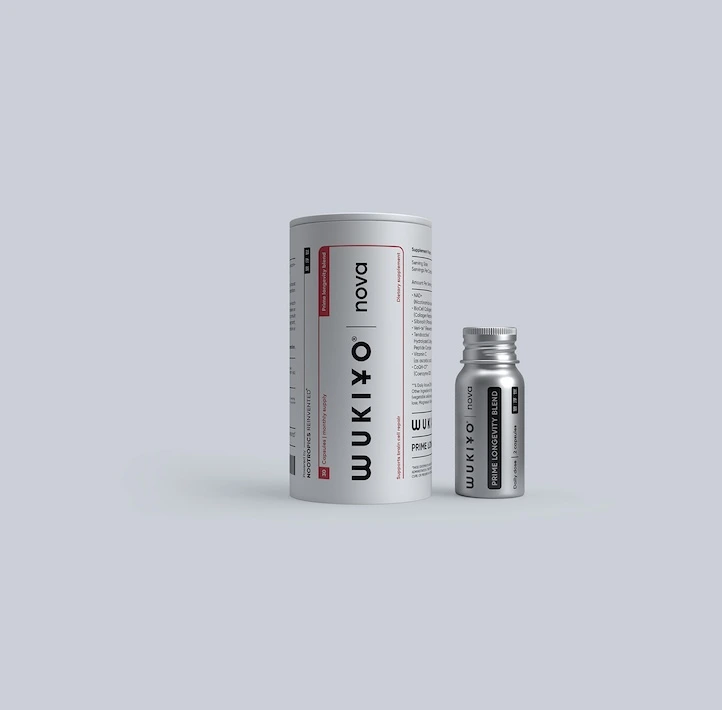
Prime
longevity blend
Prime longevity
blend
Buy 2 Items | Get 10% Off.
$81 USD $69 USD

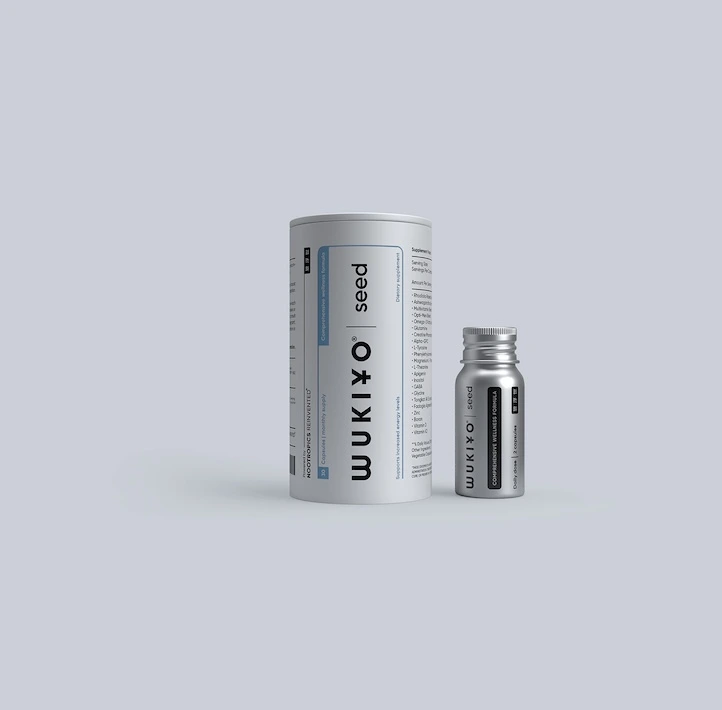
Comprehensive
wellness formula
Comprehensive wellness
formula
Buy 2 Items | Get 10% Off.
$81 USD $69 USD

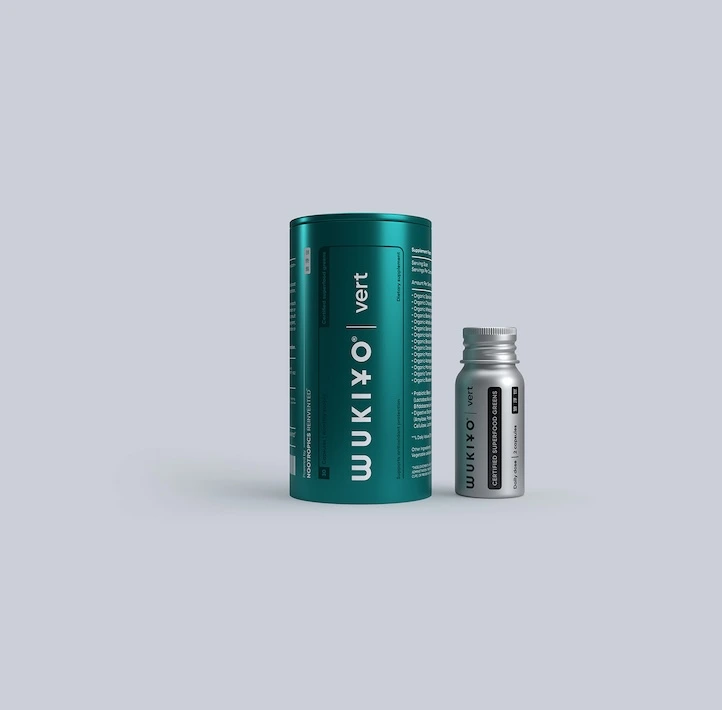
Certified
superfood greens
Certified superfood
greens
Buy 2 Items | Get 10% Off.
$54 USD $45 USD

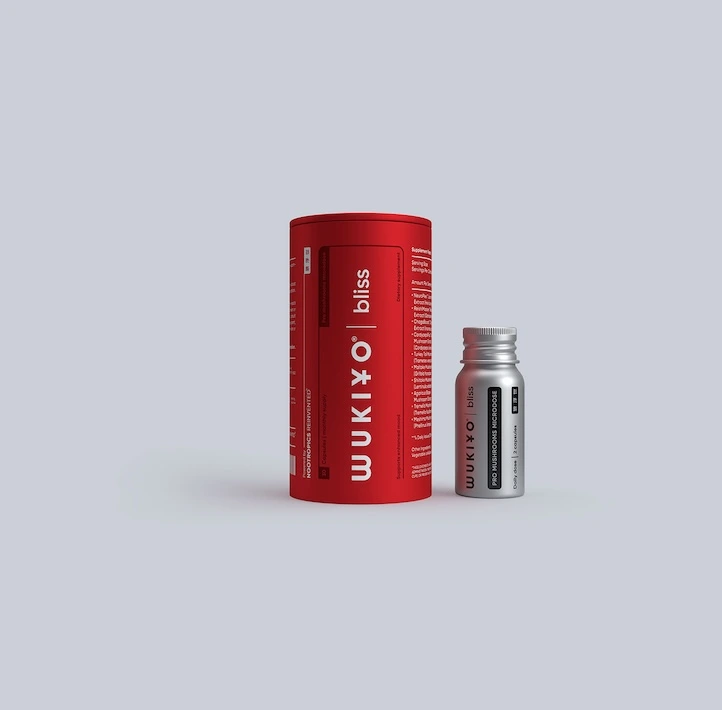
Pro
mushrooms microdose
Pro mushrooms
microdose
Buy 2 Items | Get 10% Off.
$99 USD $84 USD

Complete
nootropic essentials
Complete nootropic
essentials
Buy 2 Items | Get 10% Off.
$54 USD $45 USD
Other posts

September 21, 2026
Inside the Wild Biohacking Underground: The Compounds People Are Using Before Science Catches Up
September 14, 2026
WUKIYO | apex and the End of the Single-Pathway Nootropic

September 7, 2026
You Are Not Tired. Your Brain May Be Spending Energy Wrong.

August 31, 2026
The Brain Does Not See Reality. It Negotiates With It.

August 24, 2026
Memory Was Not Designed to Preserve the Past. It Was Designed to Build the Future.

August 10, 2026
The Brain Was Never Built to Think. It Was Built to Predict.

July 27, 2026
The Energy Hypothesis: The Hidden Rule Behind Human Behavior, Perception, and the Future of Cognitive Freedom

July 20, 2026
The Mitochondrial Revolution: The Tiny Power Plants That May Determine Everything

July 13, 2026
The Night Shift of the Human Brain: What Happens While You Sleep Could Determine How Long You Live

July 6, 2026