







WUKIYO | apex and the End of the Single-Pathway Nootropic
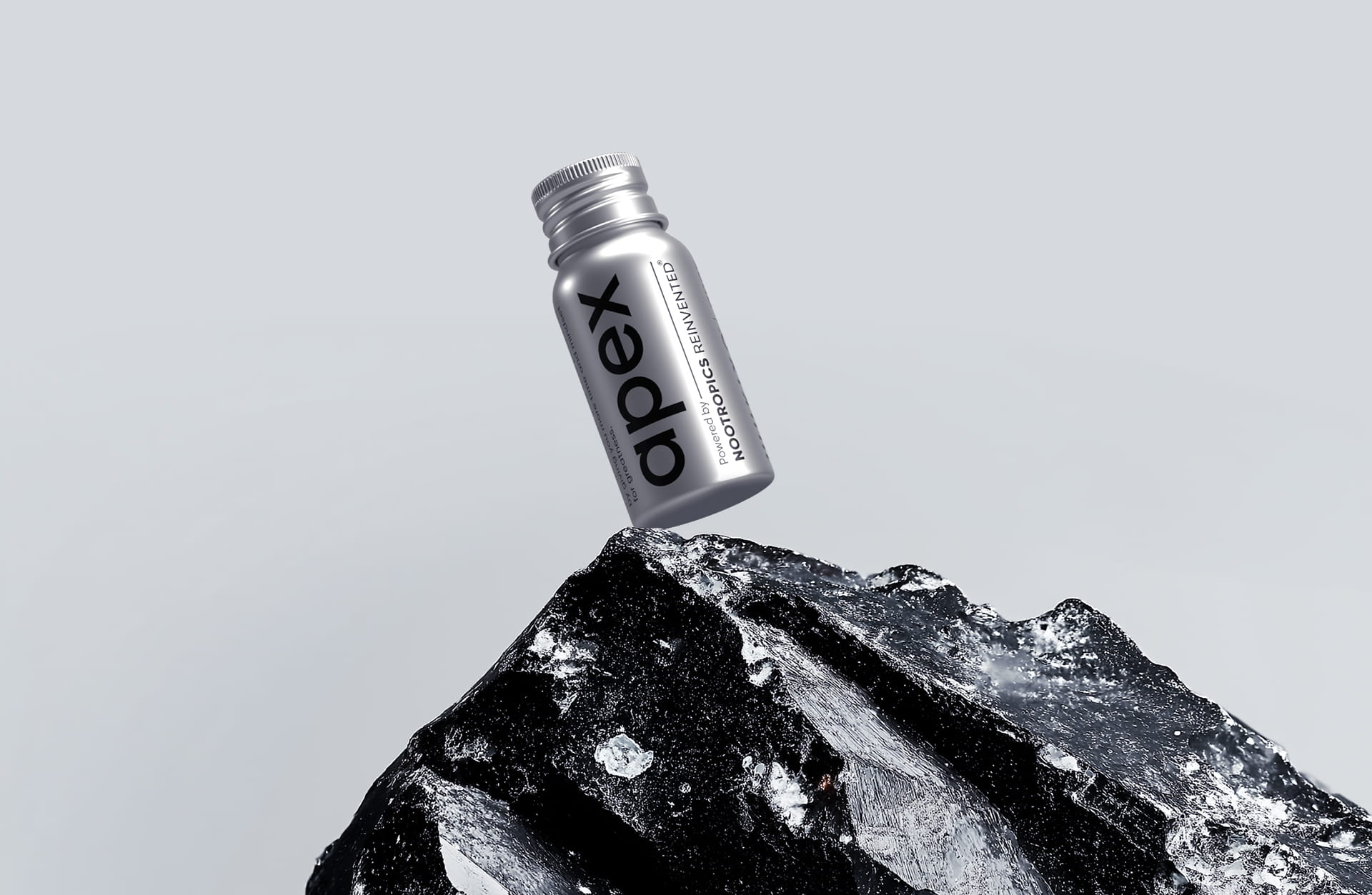
Table of contents
- The Brain Does Not Have a Focus Pathway
- Layer One: Catecholamine Readiness
- Layer Two: Building the Synapse, Not Merely Stimulating It
- Layer Three: Cholinergic Control
- Layer Four: Old-School Nootropics Meet Modern Systems Design
- Layer Five: Arousal Without Simply Adding More Caffeine
- Layer Six: Alpinia and the Search for Sustained Alertness
- Layer Seven: Protecting the Machinery Producing the Performance
- Layer Eight: Redox Control
- The Most Provocative Thing About Apex Is the Dosing
- The Apex Hypothesis
- Why This Matters Beyond Apex
- What Apex Is Not
- Beyond Supplements: What Happens When Peptides Arrive?
- The Real Meaning of Apex
- Key Takeaways
Most cognitive supplements are built around an assumption that neuroscience stopped believing years ago: find one pathway, increase it, and expect cognition to improve.
More dopamine for motivation. More acetylcholine for memory. More caffeine for attention. More blood flow for mental energy.
The logic is attractive because it is simple. The brain is not.
Attention depends on arousal, but excessive arousal can degrade executive control. Acetylcholine participates in attention and memory, but its usefulness depends on receptor dynamics, membrane integrity and network state. Dopaminergic signaling can facilitate motivation and cognitive control, but too little and too much can both impair performance. Synaptic transmission consumes energy. Energy metabolism generates oxidative pressure. Learning requires plasticity, while useful cognition requires that plasticity remain organized rather than indiscriminate.
Cognitive performance is therefore not a switch.
It is a coordination problem.
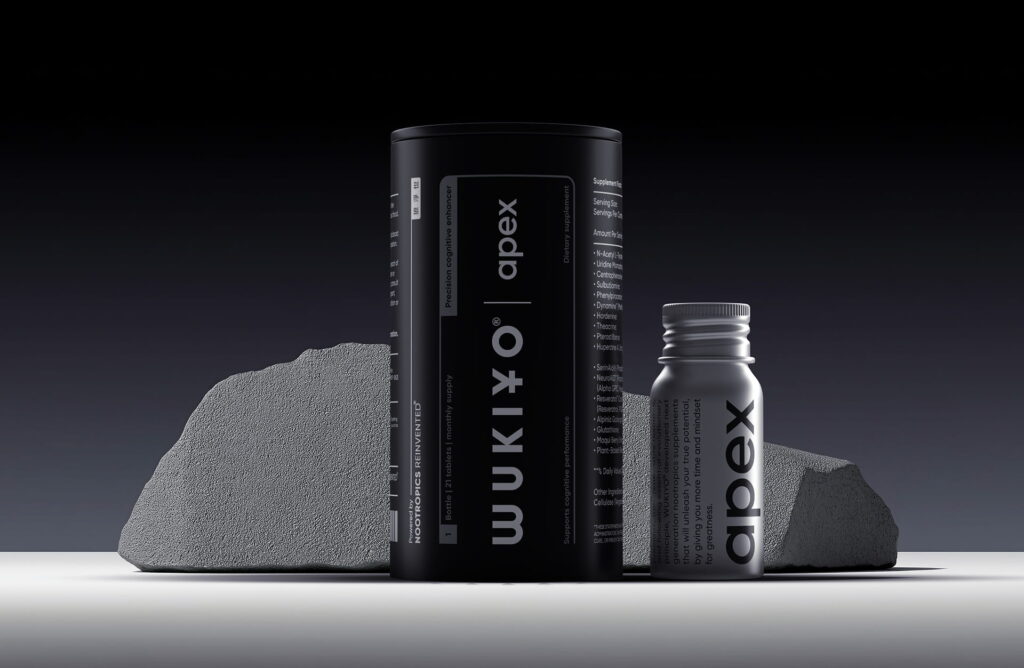
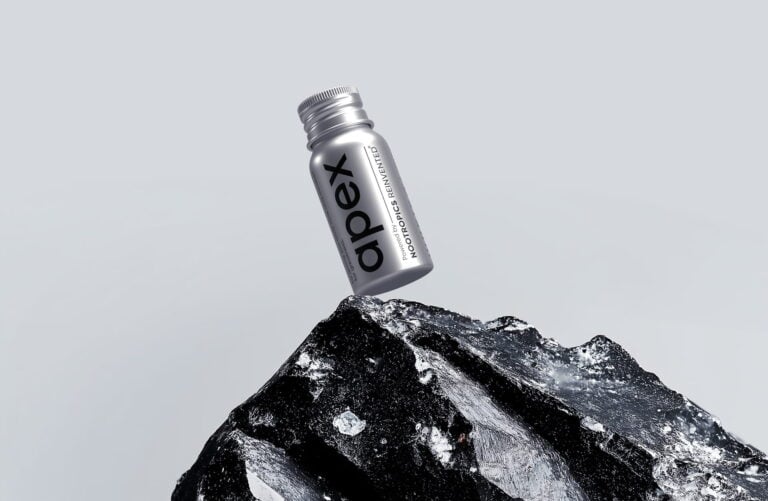
That is the more interesting way to understand WUKIYO | apex.
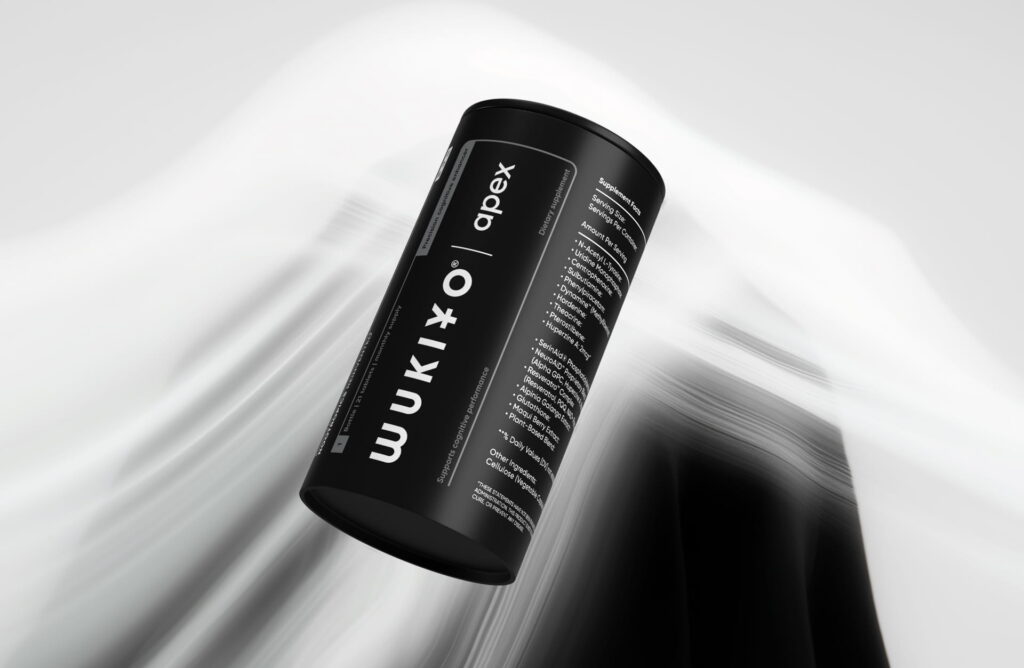
The formula does not read like a conventional focus supplement built around one fashionable ingredient. It combines compounds associated with catecholamine precursor availability, cholinergic transmission, membrane biology, excitatory signaling, methylxanthine-like arousal, mitochondrial and redox biology, neuroprotection and sustained attention.
Whether that exact combination ultimately produces effects greater than its individual components requires direct clinical testing.
But the design philosophy is already worth examining because it points toward where nootropics may be going next.
Not stronger stimulation.
Better orchestration.
The Brain Does Not Have a Focus Pathway
The phrase “focus supplement” is biologically crude.
Focused cognition emerges from several interacting neural systems. Prefrontal cortical networks have to maintain task-relevant information while suppressing distraction. Catecholamines such as dopamine and norepinephrine influence the stability and responsiveness of those networks. Acetylcholine participates in attention, learning and memory encoding. Glutamatergic transmission carries much of the excitatory information moving through the cortex. Cellular membranes influence receptors, vesicles and signal transduction. Mitochondria must continuously finance the electrical and chemical work.
The first conceptual strength of apex is therefore its refusal to behave as though one molecule owns cognition.
Its ingredient architecture spans several distinct biological layers.
That makes the formula more interesting than the usual question of whether one ingredient “boosts focus.”
The better question is whether those layers can be coordinated.

Layer One: Catecholamine Readiness
Apex begins with N-Acetyl L-Tyrosine, a modified form of tyrosine.
Tyrosine sits upstream of catecholamine synthesis. It is converted through tyrosine hydroxylase to L-DOPA, which can subsequently become dopamine, norepinephrine and epinephrine.
This matters because catecholamines are deeply involved in cognitive control, motivation, vigilance and adaptation to stress.
But the relationship is not linear.
More dopamine does not simply equal more cognition. Prefrontal performance is often described through an inverted-U relationship in which inadequate catecholamine signaling can impair function, while excessive signaling can destabilize the same networks.
That distinction changes how a serious nootropic should be designed.
The objective should not be maximum neurotransmitter output.
It should be sufficient biochemical availability inside an appropriately regulated system.
Apex pairs tyrosine-related support with several compounds acting elsewhere in the cognitive architecture, which is more coherent biologically than treating dopamine as a standalone performance switch.
Layer Two: Building the Synapse, Not Merely Stimulating It
Uridine monophosphate introduces a different idea.
Uridine participates in nucleotide metabolism and provides precursors relevant to membrane phospholipid synthesis. Neuronal communication depends on membranes because synapses are physical structures. Receptors sit within membranes. Vesicles fuse with membranes. Axons and dendrites exist because lipid bilayers maintain cellular architecture.
This is one of the most overlooked realities in consumer nootropics.
Thinking is physical.
Every memory that becomes biologically durable requires changes in actual cellular machinery.
Uridine therefore belongs conceptually to a different category from a stimulant. Rather than merely changing moment-to-moment arousal, it intersects with the substrate environment from which neuronal structures are maintained.
Apex reinforces that membrane-level logic with SerinAid phosphatidylserine.
Phosphatidylserine is a major phospholipid within cellular membranes, including neuronal membranes, where it participates in signaling, membrane organization and cellular communication. Human evidence for supplemental phosphatidylserine is not uniformly conclusive across every population and cognitive endpoint, but its biological role is not speculative.
The interesting design idea is the pairing itself.
Apex is not only asking how forcefully the neuron fires.
It is also asking what the neuron is made of.
Layer Three: Cholinergic Control
The formulation then moves into acetylcholine biology through several routes.
Its proprietary NeuroAiD blend lists Alpha GPC, Huperzine A and Noopept, while the formula separately lists additional Huperzine A.
Alpha GPC supplies choline that can contribute to acetylcholine synthesis. Acetylcholine is involved in selective attention, learning, encoding and memory formation.
Huperzine A approaches the system from the opposite direction.
Instead of providing more precursor, Huperzine A inhibits acetylcholinesterase, the enzyme responsible for breaking down acetylcholine.
Conceptually, those mechanisms are complementary.
One supplies material.
The other can slow degradation.
That creates what could be described as cholinergic persistence.
The important scientific restraint is that Huperzine A’s strongest human literature has largely involved cognitive impairment and dementia rather than demonstrating dramatic enhancement in healthy high-performing adults. Its pharmacology is real, but translating disease-state findings directly into healthy-user performance claims would overstate the evidence.
That is exactly where WUKIYO should separate itself from conventional nootropic marketing.
Mechanism is not outcome.
But mechanism still matters.
Layer Four: Old-School Nootropics Meet Modern Systems Design
Apex contains several compounds rarely seen together in mainstream wellness products: centrophenoxine, sulbutiamine, phenylpiracetam and Noopept.
These compounds belong more closely to the historical pharmacological nootropic tradition than to the modern botanical supplement category.
Centrophenoxine, also known as meclofenoxate, is a synthetic compound historically investigated in relation to cholinergic function and age-associated cognitive impairment.
Sulbutiamine is a lipophilic thiamine derivative originally developed to alter the pharmacokinetic behavior of vitamin B1-related chemistry. Research has examined it in fatigue and neurological contexts, although the human evidence remains limited and inconsistent.
Phenylpiracetam belongs to the racetam family and has historically been investigated in Eastern European and Russian clinical contexts. Compared with classic nutritional ingredients, its pharmacology is considerably more drug-like.
Noopept similarly belongs to a more experimental class of cognitive-enhancement compounds, with mechanistic and preclinical literature substantially exceeding high-quality evidence in healthy human populations.
This cluster is scientifically important for another reason.
It prevents apex from being honestly described as merely a vitamins-and-herbs supplement.
Its design reaches into the historical frontier of synthetic nootropics.
That also means regulatory classification matters. In the United States, FDA has previously stated that Noopept and phenylpiracetam do not qualify as dietary supplements or conventional foods. Centrophenoxine has likewise been described in the scientific literature as an unapproved drug found in products marketed as cognitive supplements.
That does not erase their pharmacology.
It makes regulatory precision mandatory.
A formulation this ambitious should be treated with the same intellectual seriousness with which it was apparently designed.

Layer Five: Arousal Without Simply Adding More Caffeine
Apex becomes particularly unusual in its arousal architecture.
It includes Dynamine, or methylliberine, theacrine and hordenine rather than relying on a conventional high-dose caffeine model.
Methylliberine and theacrine are purine alkaloids structurally related to caffeine. Human research has investigated combinations of caffeine, methylliberine and theacrine for vigilance, reaction time and subjective energy.
One randomized study found that a combination containing caffeine, methylliberine and theacrine improved vigilance reaction time similarly to a higher caffeine exposure, suggesting that non-caffeine purine alkaloids may offer another route toward altering alertness.
That does not establish apex’s particular doses as equivalent.
But it reveals the intellectual logic.
Instead of assuming that more stimulation requires more caffeine, the formula distributes arousal chemistry across several compounds with differing pharmacological profiles.
Hordenine adds another experimental dimension. Laboratory research suggests interactions with dopaminergic and adrenergic biology, including receptor activity and possible effects on norepinephrine-related signaling.
Human evidence, however, is sparse.
That is not a weakness that should be hidden behind marketing language.
It is a frontier that needs better data.
Layer Six: Alpinia and the Search for Sustained Alertness
One of apex’s less obvious ingredients may eventually become one of its more interesting ones.
Alpinia galanga has been investigated in controlled human studies for mental alertness and sustained attention.
Research has examined Alpinia both independently and alongside caffeine, with findings suggesting potential effects on alertness and subjective fatigue.
The mechanism is not completely established, and not every Alpinia extract should be assumed equivalent.
Still, its presence tells us something about the architecture.
Apex is not simply attempting to make the nervous system more stimulated.
It appears designed around maintaining usable alertness across time.
That distinction is subtle but important.
An acute spike in arousal is easy to engineer.
Sustained cognitive control without disproportionate physiological cost is much harder.
Layer Seven: Protecting the Machinery Producing the Performance
Cognitive enhancement creates an overlooked problem.
Neurons that work harder require more energy.
Higher cellular activity means more mitochondrial work, altered calcium handling and potentially greater oxidative pressure.
Apex therefore includes another group of compounds aimed not primarily at neurotransmission but at the biological environment supporting it.
The Resveratro complex lists resveratrol, PQQ and NAD+ precursors.
These molecules occupy different areas of cellular metabolism.
Resveratrol is a polyphenol studied extensively in relation to vascular biology, metabolic regulation and cellular stress responses. Human cognitive findings are mixed and population-dependent, which makes sweeping “brain booster” language inappropriate.
PQQ has generated increasing interest because of its relationship with redox biology and mitochondrial function. Randomized human studies have reported signals suggesting possible cognitive effects, although the evidence base remains much smaller than consumer enthusiasm sometimes implies.
NAD+ biology intersects with cellular energy metabolism, redox reactions, DNA repair and sirtuin activity. Again, the existence of a mechanistic pathway does not guarantee that every NAD+ precursor, at every dose, improves cognition.
The important idea is architectural.
Apex appears to recognize that increased neural output cannot be separated indefinitely from the metabolic machinery financing that output.
That is much closer to systems neuroscience than conventional supplement formulation.
Layer Eight: Redox Control
The formula extends its cellular-defense logic through pterostilbene, glutathione and maqui berry extract.
Pterostilbene is structurally related to resveratrol and has been studied primarily for antioxidant and metabolic properties, although robust evidence for meaningful cognitive enhancement in healthy humans remains limited.
Glutathione is one of the body’s central endogenous redox molecules. Human trials have demonstrated that oral glutathione can, under some conditions and formulations, increase glutathione stores, although earlier studies produced less consistent results.
Maqui berry contributes another polyphenol-rich botanical layer. Its strongest research base relates more to antioxidant and metabolic endpoints than direct cognitive enhancement.
Taken individually, none justifies extravagant cognitive claims.
Taken conceptually, however, they reveal something about the formula.
Apex is attempting to manage not only neuronal signaling, but some of the biological consequences of sustaining that signaling.
That is an important distinction. Performance without resilience eventually becomes depletion.
The Most Provocative Thing About Apex Is the Dosing
This is where the discussion becomes considerably more sophisticated.
Several ingredients in apex appear on the label at doses lower, sometimes substantially lower, than doses commonly used when those ingredients are studied individually.
That fact can be interpreted in two ways.
The simplistic interpretation is that more must always be better and therefore every ingredient should independently appear at its typical monotherapy research dose.
Systems pharmacology raises a more interesting possibility.
Perhaps the formula is not intended to behave as seventeen separate monotherapies compressed into one tablet.
Perhaps the design hypothesis is low-dose network orchestration.
In pharmacology, combination therapies can sometimes produce useful effects through complementary mechanisms without every component being administered at its standalone maximum. Oncology, infectious disease, hypertension and anesthesia routinely demonstrate that biological systems can respond differently to combinations than to isolated compounds.
But this analogy has limits.
It would be scientifically irresponsible to assume synergy merely because synergy is theoretically possible.
Apex therefore creates an unusually interesting scientific question:
Can a broad, low-dose cognitive architecture generate a systems-level effect that would not be predicted from evaluating each ingredient independently?
That question cannot be answered by an ingredient list.
It requires a trial.
And that is precisely the trial I would want to see.
The Apex Hypothesis
The most intellectually defensible way to describe WUKIYO | apex is not “the world’s strongest nootropic.”
That sentence tells us almost nothing.
A more interesting proposition is this:
Apex is an attempt to engineer cognitive state across multiple biological constraints simultaneously.
Its architecture can be divided into roughly five functional domains.
Catecholamine readiness through tyrosine-related chemistry.
Cholinergic availability and persistence through Alpha GPC and Huperzine A.
Synaptic and membrane support through uridine and phosphatidylserine.
Arousal architecture through methylliberine, theacrine, phenylpiracetam and related compounds.
Metabolic and redox support through PQQ, NAD+ precursors, resveratrol, pterostilbene, glutathione and polyphenolic compounds.
That is fundamentally different from adding caffeine to a vitamin blend and calling it cognitive enhancement.
It attempts to treat cognition as a network.
Whether the network design proves superior is an empirical question.
The architecture deserves the question.
Why This Matters Beyond Apex
The nootropics industry is approaching an inflection point.
For years, formulation largely followed ingredient trends. Lion’s Mane became popular, so products added Lion’s Mane. Alpha GPC became popular, so products added Alpha GPC. NAD+ became culturally important, so NAD+ language appeared everywhere.
That is ingredient collecting.
The future should be architecture.
Artificial intelligence is already transforming drug discovery by modeling molecular interactions rather than studying compounds only in isolation. Systems biology increasingly understands disease and performance as network phenomena. Precision medicine is moving toward phenotype-specific interventions rather than universal protocols.
Nootropic formulation will eventually have to make the same transition.
The important question will stop being:
“What ingredients are inside?”
It will become:
“What biological system was this designed to produce?”
Apex is interesting because its formulation already invites that question.
What Apex Is Not
Scientific confidence also requires boundaries.
Apex has not been demonstrated to increase intelligence.
It has not been shown to permanently rewire the healthy human brain.
Its exact formula has not, based on currently available public evidence, been proven in a published randomized controlled trial to outperform conventional nootropics.
And several of its more aggressive compounds have evidence bases that are materially weaker than their reputation in biohacking culture.
None of those statements diminish the product.
They define what the next scientific step should be.
The strongest possible future for apex is not increasingly dramatic marketing.
It is measurement.
Randomized crossover testing.
Psychomotor vigilance.
Working-memory paradigms.
Task switching.
Response inhibition.
Reaction-time variability.
Subjective fatigue.
EEG.
Functional near-infrared spectroscopy.
Potentially pharmacokinetics for key components.
Then the formula stops being an interesting architecture and becomes a quantified architecture.
That is the standard WUKIYO should pursue.

Beyond Supplements: What Happens When Peptides Arrive?
There is another reason apex matters now.
Cognitive enhancement is moving toward interventions increasingly close to biological signaling itself.
Experimental peptides, neurotrophic signaling agents, AMPA-modulating compounds, mitochondrial-derived peptides and eventually more precise neurotechnologies could target cellular processes at a level traditional nutraceuticals cannot.
Some may eventually replace functions currently pursued through conventional nootropics.
WUKIYO should not fear that future.
It should prepare for it.
A product such as apex represents one stage in the evolution from single-compound supplementation toward systems-level cognitive engineering.
The next stage may combine nutritional infrastructure with biomarkers, adaptive dosing, pharmacological signaling and personalized neurobiology.
At that point, “supplement” may cease to be a useful category.
We may simply call it performance biology.
The Real Meaning of Apex
The easiest way to sell a nootropic is to promise that it will make someone smarter.
The more interesting ambition is to understand what prevents intelligence from being expressed cleanly in the first place.
Attention can fail.
Arousal can overshoot.
Neurotransmitter availability can change.
Mental energy can fluctuate.
Stress can degrade executive function.
Cellular metabolism can become a bottleneck.
Cognitive output is what remains after all of those constraints interact.
Apex is compelling because its formulation appears to have been designed around that complexity rather than pretending cognition belongs to one molecule.
That does not make every mechanism proven.
It makes the hypothesis worth testing.
And perhaps that is where serious cognitive enhancement should go next.
Not toward increasingly aggressive promises.
Toward increasingly sophisticated models of the brain.
Because the future of nootropics will not belong to the company that finds the loudest stimulant.
It will belong to whoever learns how to coordinate the system.
WUKIYO | apex is already asking that question.
The Standard Has Moved
There is an enormous difference between assembling fashionable ingredients and engineering a formulation around the complexity of human cognition.
WUKIYO | apex was built on the second idea. Look at the architecture. Look at the compounds. Look at the pathways they intersect. Then look at what most of the category still calls a nootropic.
We are comfortable with the comparison.
In fact, we encourage it.
Because once you understand the science behind apex, the question is no longer whether another product can promise the same thing. Marketing can promise almost anything.
The question is whether anyone else has actually built the same thing.
We haven’t seen it.
And if someone eventually manages to capture even one percent of what we are trying to do here, good.
At least the category will finally be moving in the right direction.
WUKIYO | apex
Catch up.
Key Takeaways
1. WUKIYO | apex is best understood as a multi-axis cognitive architecture rather than a single-pathway focus supplement. Its ingredients intersect with catecholamine biology, cholinergic signaling, membrane structure, arousal, cellular energetics and redox regulation.
2. The formula’s most interesting scientific proposition is coordination. Cognitive performance emerges from interacting systems, so a network-oriented formulation is conceptually more aligned with modern neuroscience than the idea that one neurotransmitter determines focus.
3. Uridine and phosphatidylserine introduce a structural dimension. They shift part of the conversation from merely manipulating neural signals toward supporting the membranes and synaptic environment through which those signals operate.
4. Alpha GPC and Huperzine A approach acetylcholine from complementary directions. One contributes precursor availability, while the other can inhibit enzymatic breakdown, creating a theoretically coherent cholinergic architecture.
5. Methylliberine, theacrine, Alpinia galanga and other arousal-related compounds make apex different from conventional caffeine-heavy formulas. The design appears to distribute alertness across multiple mechanisms rather than simply escalating caffeine exposure.
6. PQQ, NAD+ precursors, resveratrol, pterostilbene, glutathione and polyphenolic compounds introduce mitochondrial and redox biology into the cognitive equation. This reflects the increasingly important idea that neural signaling cannot be separated from the metabolic machinery supporting it.
7. Several apex ingredients have stronger mechanistic or preclinical evidence than direct evidence for cognitive enhancement in healthy humans. WUKIYO should preserve that distinction because scientific credibility is more valuable than exaggerated certainty.
8. The formula raises an important dosing hypothesis. Several components appear below doses commonly examined as standalone interventions, suggesting that the most interesting interpretation is potential low-dose network orchestration rather than seventeen independent monotherapies. That hypothesis requires direct clinical validation.
9. The next breakthrough for apex should be measurement. A properly designed randomized study examining attention, working memory, cognitive flexibility, reaction time, fatigue and neurophysiological endpoints could determine whether the architecture produces effects greater than ingredient-level predictions.
10. Apex points toward a larger transition in cognitive enhancement. The future may move from ingredient stacking toward systems biology, biomarkers, adaptive formulations, peptides and increasingly precise biological signaling.
Related products


Precision
cognitive enhancer
Precision cognitive
enhancer

Buy 2 Items | Get 10% Off.
$99 USD $84 USD

The Complete
Mind and Body
The Complete
Mind and Body
Buy 2 Items | Get 10% Off.
$234 USD $199 USD


Ultimate
WUKIYO® Experience
Ultimate WUKIYO®
Experience
Buy 2 Items | Get 10% Off.
$786 USD $693 USD
Other posts
September 14, 2026
WUKIYO | apex and the End of the Single-Pathway Nootropic

September 7, 2026
You Are Not Tired. Your Brain May Be Spending Energy Wrong.

August 31, 2026
The Brain Does Not See Reality. It Negotiates With It.

August 24, 2026
Memory Was Not Designed to Preserve the Past. It Was Designed to Build the Future.

August 10, 2026
The Brain Was Never Built to Think. It Was Built to Predict.

July 27, 2026
The Energy Hypothesis: The Hidden Rule Behind Human Behavior, Perception, and the Future of Cognitive Freedom

July 20, 2026
The Mitochondrial Revolution: The Tiny Power Plants That May Determine Everything

July 13, 2026
The Night Shift of the Human Brain: What Happens While You Sleep Could Determine How Long You Live

July 6, 2026
Brain Fog Is Not a Diagnosis. It Is a Warning Signal

June 29, 2026