







The Night Shift of the Human Brain: What Happens While You Sleep Could Determine How Long You Live

Table of contents
Every night, something extraordinary happens inside your skull.
You are unconscious.
You are disconnected from the external world. Your awareness disappears for hours at a time.
And yet some of the most important biological work of your entire day is only beginning.
For centuries, sleep was viewed as a passive state. A period of inactivity. A temporary shutdown required to recover from waking life.
Science now tells a very different story.
Sleep is not the absence of activity.
It is one of the most active and sophisticated biological processes in the human body.
While you drift into darkness, billions of neurons begin orchestrating a carefully synchronized sequence of events that influence memory, immunity, metabolism, emotional stability, cognitive performance, and potentially even the rate at which you age.
The question is no longer whether sleep matters. The question is whether we have underestimated its importance by an order of magnitude.
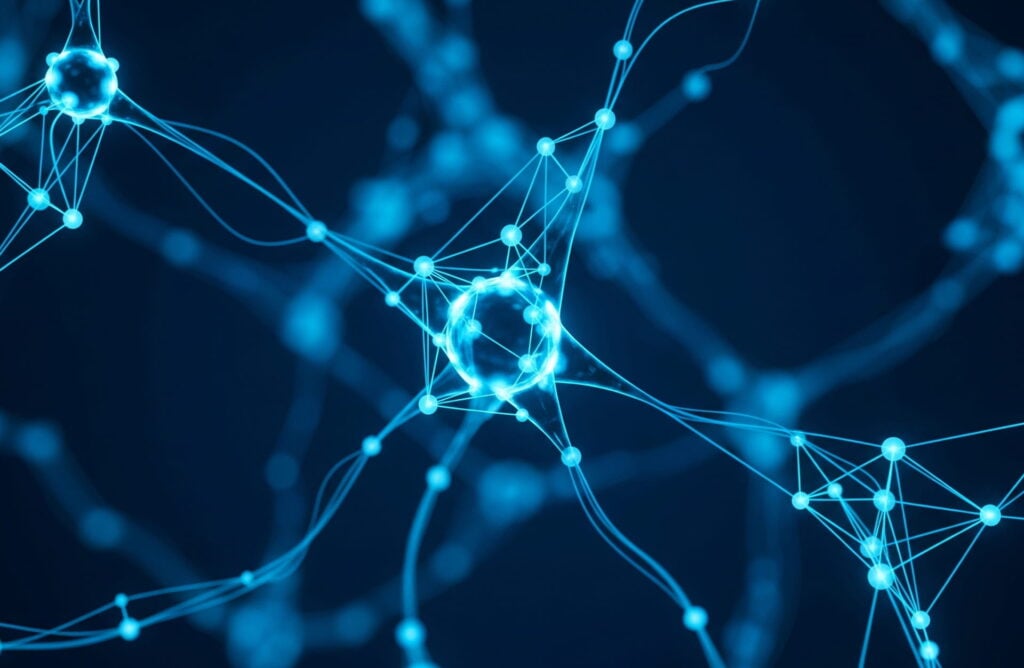
The Greatest Biological Performance Enhancer Ever Discovered
Imagine a pharmaceutical compound capable of improving memory, accelerating learning, regulating hormones, strengthening immunity, enhancing athletic recovery, supporting cardiovascular health, reducing the accumulation of neurological waste, and improving emotional resilience.
Such a compound would become one of the most valuable products ever created.
Yet every human already possesses access to it. It is called sleep.
Unlike most interventions in modern health, sleep does not target one system.
It influences nearly all of them.
This is what makes it unique.
The body is not simply resting during sleep. It is recalibrating.
Hormones are adjusted. Tissue repair accelerates. Immune surveillance increases. Memory networks reorganize. Energy systems prepare for the following day.
The body is not powering down.
It is undergoing maintenance.
The Discovery That Changed Everything
One of the most fascinating discoveries in modern neuroscience emerged only recently.
For decades, scientists understood that the body possessed mechanisms for removing cellular waste. The lymphatic system performs this function throughout much of the body.
The brain, however, appeared different.
Researchers could not fully explain how waste products were efficiently removed from such a metabolically active organ.
Then a remarkable discovery emerged.
The glymphatic system.
This network functions as a specialized waste-clearance pathway within the brain. During sleep, cerebrospinal fluid circulates through neural tissue with increased efficiency, helping remove metabolic byproducts accumulated throughout the day.
In simple terms, the brain appears to perform a form of biological housekeeping while you sleep.
Among the substances being cleared are proteins that have attracted considerable attention in aging and neurodegenerative research.
The implication is profound. Sleep may not merely support brain function. It may help preserve it.
Memory Is Not Created When You Learn
This idea surprises many people.
Learning does not end when information enters the brain. In many ways, the process is only beginning.
Throughout the day, experiences are collected. New information arrives continuously. Skills are practiced. Conversations occur. Decisions are made.
Sleep determines what happens next.
During specific sleep stages, neural circuits replay patterns of activity experienced during waking hours. Connections are strengthened. Relevant information is prioritized. Less useful information is discarded.
The brain effectively edits reality.
What remains becomes memory.
What disappears becomes forgotten.
This means that sleep is not merely supporting learning. Sleep is helping create it.
The student studying for an examination.
The entrepreneur building a company.
The athlete refining movement patterns.
The musician mastering a new skill.
All are relying on processes that continue long after conscious effort ends.

The Longevity Connection
Perhaps the most exciting frontier of sleep research involves aging.
Longevity science has exploded in recent years. Researchers are investigating everything from senescent cells and mitochondrial function to fasting protocols and peptide therapies.
Yet one variable consistently appears near the center of the conversation.
Sleep.
Poor sleep has been associated with disruptions in metabolic health, cardiovascular function, hormone regulation, immune performance, and cognitive resilience.
Conversely, consistently restorative sleep appears to support many of the biological systems associated with healthy aging.
While longevity remains a complex puzzle, sleep increasingly looks less like one piece of the puzzle and more like the table upon which the puzzle is assembled.
Why Modern Life Is Colliding With Ancient Biology
Humans evolved under conditions that remained relatively stable for hundreds of thousands of years.
Sunrise signaled activity.
Sunset signaled recovery.
Darkness carried biological meaning.
Today darkness is optional.
Artificial light extends activity far beyond natural boundaries. Notifications arrive twenty-four hours a day. Streaming platforms eliminate stopping points. Work follows people home. Global connectivity means someone is always awake somewhere.
Technology has transformed civilization.
Biology, however, still operates according to rhythms shaped long before electricity existed.
The result is an ongoing negotiation between ancient physiology and modern lifestyles.
Sometimes physiology wins.
Sometimes it sends reminders.
Fatigue.
Brain fog.
Mood instability.
Reduced performance.
The signals vary.
The message remains remarkably consistent. The brain keeps score.
The New Status Symbol
For years, society celebrated sleep deprivation.
Busy executives proudly discussed four-hour nights. Hustle culture transformed exhaustion into a badge of honor.
Something interesting is happening now.
The trend is reversing.
Increasingly, elite performers are treating sleep as a performance variable rather than a luxury.
Athletes track it.
Executives optimize it.
Researchers study it.
Biohackers obsess over it.
Why?
Because the data continues pointing in the same direction.
Recovery is not weakness.
Recovery is preparation.
The future may belong not to those willing to sacrifice sleep, but to those intelligent enough to protect it.

Beyond Recovery
The most fascinating possibility is that sleep is not merely preventing decline.
It may actively facilitate human potential.
Every night the brain reorganizes itself.
Every night memories are strengthened.
Every night biological systems communicate, repair, recalibrate, and prepare.
Every night an invisible workforce begins operating beneath conscious awareness.
And every morning we wake up expecting it all to happen again.
Perhaps the most extraordinary thing about sleep is not that it remains mysterious.
It is that something so powerful has been available to humanity all along.
For those interested in supporting cognitive recovery and daily performance, many individuals combine foundational sleep practices with targeted nutritional strategies. Products such as WUKIYO | apex are often incorporated into demanding professional routines, while WUKIYO | nova is increasingly explored by those interested in longevity-focused wellness approaches. Neither replaces quality sleep, but both align with a growing movement toward supporting the brain and body through evidence-informed optimization.
The future of health may ultimately depend less on discovering miraculous interventions and more on respecting biological systems that have been quietly protecting us for millennia. And few systems have protected us more faithfully than sleep.

Key Takeaways
• Sleep is one of the most biologically active processes in the human body.
• Modern neuroscience shows that sleep supports memory formation, recovery, hormone regulation, immune function, and cognitive performance.
• The glymphatic system helps clear metabolic waste from the brain during sleep.
• Memory consolidation occurs largely after learning, during specific sleep stages.
• Sleep is emerging as one of the most important variables in healthy aging and longevity research.
• Modern lifestyles frequently conflict with biological sleep rhythms shaped by human evolution.
• High performers increasingly view sleep as a performance multiplier rather than a luxury.
• Long-term optimization begins with respecting the body’s natural recovery systems.
Related products


Precision
cognitive enhancer
Precision cognitive
enhancer

Buy 2 Items | Get 10% Off.
$99 USD $84 USD


Prime
longevity blend
Prime longevity
blend
Buy 2 Items | Get 10% Off.
$81 USD $69 USD


The
Immunity and Energy
The Immunity
and Energy
Buy 2 Items | Get 10% Off.
$234 USD $199 USD


Ultimate
WUKIYO® Experience
Ultimate WUKIYO®
Experience
Buy 2 Items | Get 10% Off.
$786 USD $693 USD
Other posts

August 24, 2026
Memory Was Not Designed to Preserve the Past. It Was Designed to Build the Future.

August 10, 2026
The Brain Was Never Built to Think. It Was Built to Predict.

July 27, 2026
The Energy Hypothesis: The Hidden Rule Behind Human Behavior, Perception, and the Future of Cognitive Freedom

July 20, 2026
The Mitochondrial Revolution: The Tiny Power Plants That May Determine Everything

July 13, 2026
The Night Shift of the Human Brain: What Happens While You Sleep Could Determine How Long You Live

July 6, 2026
Brain Fog Is Not a Diagnosis. It Is a Warning Signal

June 29, 2026
The Dopamine Economy: Why Your Brain Is Being Auctioned Every Day

April 3, 2026
6 Years of Excellence: The Evolution of Focus in the Age of Noise

March 20, 2026
Peptides Are the Future of Performance. But the Future Requires Infrastructure.

March 13, 2026