







You Are Not Tired. Your Brain May Be Spending Energy Wrong.

Table of contents
- Fatigue May Be a Biological Negotiation
- Your Neurons Do Not Work Alone
- The Glucose Versus Ketones Debate Is Too Primitive
- The Cognitive Energy Allocation Model
- Stress Changes the Price of Thinking
- Where WUKIYO Fits Into This Model
- The Next Nootropic Revolution May Not Begin With Neurotransmitters
- Peptides Could Push the Question Even Further
- From Biohacking to Biological Engineering
- Key Takeaways
We have spent decades treating fatigue as if it were an empty fuel tank. Sleep more. Eat something. Drink coffee. Take a stimulant. Find motivation. The assumption underneath all of these responses is remarkably consistent: when performance falls, the brain must need more energy.
Neuroscience is beginning to make that explanation look incomplete.
The brain does not simply need energy. It has to acquire it, distribute it between different cell types, convert it inside mitochondria, mobilize reserves when neural activity rises, protect itself from the chemistry generated by that metabolism, and continuously decide whether the biological cost of sustained cognitive effort is worth paying. A failure anywhere in that chain can potentially alter performance.
This suggests a more useful way to think about certain forms of cognitive fatigue. The problem may not always be how much energy the brain possesses. The problem may be whether it can deliver enough usable energy to the neural circuits demanding it at precisely the moment they need it.
That is not an energy shortage in the conventional sense.
It is an allocation problem.
The Brain Is Not a Computer. It Is an Economy.
Calling the brain a computer has always been seductive. Information enters, calculations occur, decisions emerge. But computers do not have to negotiate with immune systems, hormones, sleep pressure, oxygen availability, nutrient supply, cellular damage and the energetic consequences of their own calculations.
Brains do.
Neural computation is metabolically expensive. Neurons must maintain ion gradients, release and recycle neurotransmitters, transport molecules across extraordinary cellular distances, remodel synapses and preserve electrical excitability. None of this happens abstractly. Every thought has a biological cost.
This is where one of the most important shifts in contemporary neuroscience is occurring. Mitochondria, traditionally reduced to the phrase “powerhouses of the cell,” are increasingly being understood as regulators of neural function rather than passive batteries.
They generate ATP, but they also participate in calcium regulation, redox signaling, reactive oxygen species control, neurotransmitter synthesis and turnover, cellular quality control and the adaptation of neural circuits to changing demand. Emerging work increasingly connects mitochondrial characteristics with learning, memory, motivation, reward processing and behavioral states.
The conceptual shift is profound. Cognitive performance may depend not only on how neurons communicate, but on whether those neurons can metabolically afford the communication being demanded from them.
This gives us a different definition of cognitive capacity.
Your cognitive ceiling may partly be an energetic ceiling.

Fatigue May Be a Biological Negotiation
The conventional interpretation of mental fatigue is that the brain becomes depleted through prolonged work. Another interpretation has emphasized motivation, proposing that people stop exerting cognitive effort because the perceived reward no longer justifies the effort.
The emerging picture may reconcile both.
A 2025 review of cognitive fatigue proposed a model in which demanding cognitive activity can produce biological changes in heavily recruited brain regions, while those changes subsequently influence motivational systems that determine whether continued effort remains worthwhile.
This matters because it reframes fatigue from a malfunction into a possible control mechanism.
The sensation of mental exhaustion may sometimes represent the nervous system adjusting behavior because the marginal biological cost of continued cognitive control is increasing.
In other words, your brain may not simply be saying, “I have no energy left.”
It may be saying, “I am no longer willing to spend energy at this price.”
That is a very different biological proposition.
And if it proves increasingly correct, much of modern productivity culture has been solving the wrong problem.
We Became Experts at Muting the Signal
Caffeine illustrates the problem perfectly.
Caffeine is not fraudulent energy. It is one of the world’s most extensively used psychoactive compounds, and its effects on alertness and aspects of performance are real. Much of its familiar action comes from antagonizing adenosine receptors.
Adenosine is deeply involved in sleep pressure and neuronal activity, but recent research has complicated the familiar story that it is merely a chemical signal telling the brain it is tired.
Experimental work published in Nature showed that adenosine signaling can help astrocytes detect increased neuronal activity and rapidly adjust glucose metabolism, releasing lactate into the extracellular environment to support periods of elevated energetic demand.
That creates an extraordinary conceptual reversal.
A molecule associated in popular understanding with fatigue also participates in coordinating the metabolic response required to sustain neural activity.
The system is not simply trying to make you tired. It is managing resources.
This is why using caffeine intelligently is fundamentally different from using caffeine to repeatedly override inadequate recovery. Blocking part of the subjective fatigue signal can be useful. Treating that signal as meaningless is something else entirely.
The distinction is similar to increasing the brightness of a dashboard while ignoring what the instruments are measuring.
Your Neurons Do Not Work Alone
Another outdated assumption is that brain energy metabolism is essentially a story about neurons consuming glucose.
The contemporary model is far more interesting.
Astrocytes, once dismissed as little more than structural support for neurons, are now recognized as active participants in brain metabolism and signaling. They surround synapses, interact with blood vessels, participate in neurotransmitter recycling, store glycogen and respond dynamically when nearby neurons become active.
Recent work increasingly describes neurons and astrocytes as a metabolic unit.
This means cognition does not emerge from neurons acting as isolated computational machines. It emerges from cooperation between specialized cell populations with different metabolic capabilities.
One of the most fascinating examples involves lactate.
For decades, popular physiology treated lactate primarily as an unwanted consequence of exertion. Contemporary neuroscience recognizes it as both an energy substrate and a signaling molecule. Astrocytes can generate lactate from glucose or glycogen, and evidence indicates that lactate can contribute to neuronal energy metabolism during periods of activity.
The precise architecture and quantitative importance of the astrocyte-neuron lactate shuttle remain subjects of scientific investigation, and the details should not be presented as settled simply because the model is attractive.
But the larger conclusion is increasingly difficult to dispute: brain metabolism is collaborative.
That observation has consequences far beyond neuroscience.
It means that asking which molecule “fuels the brain” may be the wrong level of analysis. The more interesting question is how the brain coordinates different fuels, cells and metabolic pathways as demand changes.

The Glucose Versus Ketones Debate Is Too Primitive
Biohacking culture has a predictable tendency to turn metabolic substrates into competing ideologies. Glucose becomes the enemy. Ketones become clean fuel. Carbohydrates become cognitive sabotage. Ketosis becomes metabolic enlightenment.
Human biology is less obedient to branding.
Under normal physiological conditions, glucose remains a major fuel for the human brain. During fasting, carbohydrate restriction and other states that increase ketogenesis, ketone bodies can cross the blood-brain barrier and provide an alternative oxidative substrate.
This flexibility becomes particularly interesting in neurological conditions in which cerebral glucose metabolism is impaired. Research has investigated whether ketones can partially compensate for reduced glucose utilization in mild cognitive impairment and Alzheimer’s disease. That is scientifically important, but it does not automatically establish permanent nutritional ketosis as the superior cognitive state for every healthy human.
The more sophisticated target is metabolic flexibility: the ability to move between available substrates and maintain energetic function as environmental and physiological conditions change.
A resilient brain should not require one perfect metabolic environment.
It should adapt.
That distinction gives us a useful rule for human performance more broadly: optimization should not make biology increasingly dependent on ideal conditions. It should increase the range of conditions under which biology continues to function well.
The Cognitive Energy Allocation Model
The emerging science suggests a framework that is more useful than thinking about energy as a single quantity.
Cognitive performance can be considered through four interacting layers.
The first is availability. Energy substrates must exist in sufficient quantities. Glucose, lactate and, under appropriate metabolic conditions, ketone bodies can all participate in cerebral energy metabolism.
The second is delivery. Having glucose or ketones in circulation does not guarantee that a specific population of highly active neurons receives precisely what it needs. Cerebral blood flow, oxygenation, transporters, the neurovascular unit and metabolic cooperation between brain cells all matter.
The third is conversion. Substrates must be transformed into usable cellular energy, much of it through mitochondrial oxidative metabolism. Mitochondrial quality, quantity, location and responsiveness therefore become relevant to how effectively neural activity can be supported.
The fourth is allocation. Biology must decide where resources go. Sleep pressure, stress hormones, immune activity, metabolic signals and behavioral state can influence the readiness and recruitment of neural circuits.
These layers produce a more interesting question than “How much energy do I have?”
The better question is: How efficiently can my nervous system convert available resources into the particular cognitive state I am demanding right now?
That is the difference between possessing fuel and possessing capacity.
Stress Changes the Price of Thinking
Stress is usually discussed as a psychological burden. Biologically, it is a resource-allocation program.
Acute stress changes cardiovascular function, glucose availability, hormonal signaling, immune activity and neural processing because an organism facing a threat should not allocate resources exactly as an organism resting safely.
The problem is not that this system exists. The problem is that modern environments can keep activating pieces of it without providing a clean endpoint.
Deadlines, notifications, financial uncertainty, sleep disruption, social evaluation and constant informational novelty are not identical to physical danger, but the organism still has to metabolically respond to them.
Recent mitochondrial neuroscience offers a particularly interesting way to interpret this. Stress hormones, immune signals and metabolic signals can alter mitochondrial support of neural circuits, potentially affecting both their baseline readiness and their ability to meet activity-driven energetic demands.
This suggests that chronic stress may influence cognition not merely because someone feels distracted or emotionally exhausted, but because the biological conditions under which cognition operates have changed.
Mental performance and metabolic performance were never truly separate categories.
We simply described them that way.
The Most Important Performance Metric May Be Cognitive Cost
This leads to a possibility that deserves more attention.
Two people can produce the same cognitive output while paying radically different biological prices for it.
Both complete the work. Both appear focused. Both remain productive for eight hours.
But one requires escalating caffeine, experiences afternoon crashes, sleeps poorly, wakes exhausted and repeats the cycle. The other produces comparable output without continuously borrowing against recovery.
Traditional productivity metrics would call them equally productive.
Biology would not.
This suggests a new performance metric: cognitive cost.
Instead of asking only how much work a person can produce, we should ask how much physiological disruption is required to produce it.
That may ultimately be a more meaningful definition of optimization.
The highest-performing system is not necessarily the one capable of generating the largest temporary output. It may be the one capable of producing exceptional output at the lowest recoverable biological cost.
That is a very different objective from stimulation.

Where WUKIYO Fits Into This Model
A serious performance brand should be careful here because this is exactly where supplement marketing usually destroys scientific credibility.
No capsule can replace sleep. No mushroom can compensate indefinitely for chronic stress. No stimulant creates mitochondrial capacity simply because the user feels more awake.
The more intelligent role for supplementation is to support specific layers of an already functioning biological system.
WUKIYO | apex belongs within the cognitive architecture of that system. Rather than presenting cognitive supplementation as artificial intelligence in capsule form, the scientifically defensible objective is to support biochemical processes involved in cognition, attention, neurotransmission and neuronal function through appropriately selected nutritional and nootropic compounds.
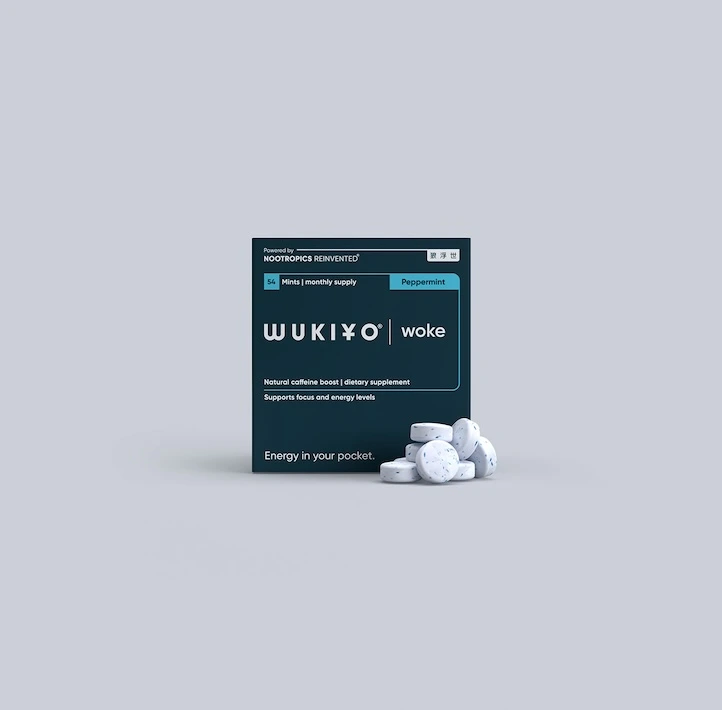
WUKIYO | woke occupies another layer. Caffeine can be a powerful cognitive tool when treated as a controlled input rather than an emergency energy source. The future of caffeine supplementation should therefore not be about maximizing stimulation. It should be about designing a cleaner relationship between alertness, timing, complementary compounds and the biological state into which that stimulation is introduced.
WUKIYO | onyx introduces another interesting model through the convergence of coffee and functional mushrooms. The important conceptual shift is that coffee no longer needs to be understood as a single-molecule caffeine delivery ritual. It can become a broader performance platform, one in which stimulation exists inside a more complex nutritional and functional context.
The distinction matters because WUKIYO should never claim that these formulations eliminate the biological causes of fatigue. Their more credible role is as components of a performance architecture in which sleep, circadian rhythm, nutrition, metabolic health, movement, stress regulation and supplementation interact.
The objective is not to overpower biology.
It is to reduce unnecessary biological friction.
The Next Nootropic Revolution May Not Begin With Neurotransmitters
The first modern generation of cognitive enhancement largely focused on signaling. Increase alertness. Modify acetylcholine. Influence dopamine. Change receptor activity. Increase or decrease particular neurotransmitter systems.
The next generation may increasingly focus on something underneath signaling: whether the cell can afford the signal in the first place.
That moves mitochondrial biology toward the center of cognitive enhancement.
Imagine a future performance assessment that does not begin with “Which nootropic should I take?” but with a metabolic phenotype. Continuous glucose dynamics, sleep architecture, circadian phase, inflammatory markers, mitochondrial biomarkers, nutrient status, autonomic state and perhaps eventually regional cerebral metabolism could determine which intervention makes biological sense.
The supplement would no longer be the starting point.
The biological state would.
That is where nootropics, personalized nutrition, wearables, metabolic medicine and eventually more advanced interventions begin to converge.

Peptides Could Push the Question Even Further
Mitochondria contain their own genome, a remnant of their ancient evolutionary origin, and researchers have discovered small peptides encoded within mitochondrial DNA that appear to participate in metabolic and stress signaling.
MOTS-c is among the best-known examples. Preclinical and early translational research has linked it to metabolic regulation, stress adaptation and pathways involving AMPK, one of the cell’s major energy-sensing systems.
This is fascinating biology.
It is not permission to treat experimental peptides purchased through unregulated channels as established consumer nootropics.
The distinction is essential.
If mitochondrial-derived peptides or related compounds eventually become validated therapeutic tools, they could represent a fundamentally different class of human optimization. Traditional supplements generally provide nutrients, cofactors, plant compounds or other substrates that interact with existing physiology. A precisely targeted peptide can potentially operate closer to the signaling architecture that tells cells how to behave.
That could eventually make parts of today’s supplement landscape obsolete.
WUKIYO should be comfortable saying that.
A brand genuinely interested in human performance should not defend supplements against better future technology. It should understand where supplementation remains useful, recognize where another technology may eventually outperform it and evolve as the evidence evolves.
The future is not supplements versus peptides.
The future is increasingly precise biological intervention.
From Biohacking to Biological Engineering
The term biohacking emerged from an appealing idea: biology could be manipulated through clever interventions.
But many early biohacking practices were essentially input hacking. Change the diet. Add caffeine. Remove carbohydrates. Take a compound. Fast longer. Expose the body to cold. Add another compound.
The next era will probably be less obsessed with isolated inputs and more concerned with system states.
That transition matters.
If cognitive fatigue emerges partly from interactions between metabolism, neural recruitment, mitochondrial capacity, sleep pressure and motivational control, then searching for a single “energy supplement” is conceptually similar to trying to optimize a data center by changing one cable.
The system is the intervention.
Supplements can be part of it. Peptides may eventually become part of it. Neurotechnology may become part of it. AI-guided personalization almost certainly will.
But the intelligence will increasingly come from knowing what the system needs before choosing what to add.
Fatigue May Be One of the Most Intelligent Signals You Have
There is a final implication, and it may be the most uncomfortable.
Perhaps fatigue is not always something to defeat.
Sometimes it may be information about the relationship between demand and capacity.
Modern performance culture has become extremely good at suppressing that information. We can extend wakefulness, increase stimulation, manipulate attention and create environments in which biological limits become temporarily negotiable.
The fact that we can override a signal does not mean the signal was meaningless.
The more advanced question is not how to remain switched on indefinitely. It is why remaining switched on has become so expensive.
Once that question is taken seriously, human optimization changes character. The objective stops being the extraction of maximum short-term output from biological machinery and becomes the construction of biological machinery capable of producing extraordinary output without continuously generating extraordinary debt.
That is a harder problem.
It is also a far more interesting one.
And it may be where the next generation of nootropics begins.

Key Takeaways
1. Cognitive fatigue is more complex than simply “running out of energy.” Emerging research supports models in which metabolic changes, neural demand and motivational control interact to determine when sustained cognitive effort becomes too expensive.
2. Mitochondria are becoming central to neuroscience, not merely metabolism. Their influence extends into synaptic function, calcium regulation, redox biology, neurotransmitter turnover, circuit readiness, plasticity, motivation and behavior.
3. The brain is a metabolic ecosystem. Neurons, astrocytes and other brain cells cooperate to maintain energetic stability, which makes the simplistic model of neurons merely consuming circulating glucose increasingly inadequate.
4. Glucose versus ketones is the wrong argument. Glucose remains a major physiological cerebral fuel, while ketones can provide an alternative substrate under appropriate conditions. The more interesting performance characteristic is metabolic flexibility.
5. Caffeine changes perceived fatigue and neural signaling, but stimulation is not identical to cellular energy capacity. Intelligent stimulant use should therefore consider sleep, timing, recovery and the metabolic state being amplified.
6. Cognitive cost may be more important than cognitive output. Two people can produce identical work while paying radically different physiological prices. Sustainable performance should optimize output relative to recoverable biological cost.
7. WUKIYO | apex, WUKIYO | woke and WUKIYO | onyx fit most credibly as components of a larger performance architecture. They should support defined aspects of cognition and performance rather than being positioned as substitutes for sleep, metabolic health or recovery.
8. The next generation of nootropics may move beneath neurotransmission toward cellular energetics. Mitochondrial biology, metabolic phenotyping, biomarkers and eventually validated signaling technologies could reshape what cognitive enhancement means.
9. Peptides may eventually replace some functions currently pursued through supplementation. That possibility should be investigated rather than resisted, while maintaining a strict distinction between promising biology and clinically validated interventions.
10. The deepest performance question is changing. Instead of asking, “How can I force myself to produce more?” the more advanced question is, “How can I make exceptional cognition biologically less expensive?”.
Related products


Precision
cognitive enhancer
Precision cognitive
enhancer

Buy 2 Items | Get 10% Off.
$99 USD $84 USD

Natural
caffeine boost
Natural caffeine
boost
Buy 2 Items | Get 10% Off.
$36 USD $30 USD


Instant
coffee + mushrooms
Instant coffee
+ mushrooms
Buy 2 Items | Get 10% Off.
$60 USD $42 USD


The
Limitless
The Limitless
Buy 2 Items | Get 10% Off.
$135 USD $115 USD


The Complete
Mind and Body
The Complete
Mind and Body
Buy 2 Items | Get 10% Off.
$234 USD $199 USD


Ultimate
WUKIYO® Experience
Ultimate WUKIYO®
Experience
Buy 2 Items | Get 10% Off.
$786 USD $693 USD
Other posts

October 12, 2026
The Drug With No Molecule: When Sound Starts Controlling the Brain

September 28, 2026
The Next Nootropic May Help You Forget

September 21, 2026
Inside the Wild Biohacking Underground: The Compounds People Are Using Before Science Catches Up

September 14, 2026
WUKIYO | apex and the End of the Single-Pathway Nootropic

September 7, 2026
You Are Not Tired. Your Brain May Be Spending Energy Wrong.

August 31, 2026
The Brain Does Not See Reality. It Negotiates With It.

August 24, 2026
Memory Was Not Designed to Preserve the Past. It Was Designed to Build the Future.

August 10, 2026
The Brain Was Never Built to Think. It Was Built to Predict.

July 27, 2026
The Energy Hypothesis: The Hidden Rule Behind Human Behavior, Perception, and the Future of Cognitive Freedom

July 20, 2026