







The Integrity of Attention

We did not build this brand only to help people “concentrate better” or be slightly more productive in an already overstimulated world.
If that were the case, there would be nothing particularly meaningful about what we do. Our interest in focus is deeper, and perhaps more uncomfortable.
We believe that attention is one of the most misunderstood faculties of the human being. It is treated as a tool for efficiency, as a commodity to be optimized, or as something that simply “gets tired.”
Rarely is it recognized for what it truly is: the subtle force through which reality takes shape in consciousness.
How we attend to the world determines what kind of world we live in. A fragmented mind inhabits a fragmented universe. A distracted mind experiences a scattered reality. A coherent mind, however, begins to perceive coherence in nature, in relationships, and even in itself.
This realization is what ultimately led to the creation of our brand: WUKIYO.
Not as a reaction to modern life, but as a response to it. We wanted to create something that does not merely fight distraction on the surface, but supports the possibility of deeper presence, clearer awareness, and more integrated attention.
The following reflection is not a product description, nor a scientific paper. It is a philosophical meditation on the conditions of contemporary life, the way attention is shaped by our environment, and what it might mean to reclaim it.
It is, in many ways, the worldview that quietly underpins everything we do.

There is a strange simplicity hiding inside the complexity of modern life: a human being, built for open horizons and long silences, has been trained to live inside rectangles. Rectangular rooms, rectangular schedules, rectangular expectations. Rectangular screens held inches from the face, like portable altars that ask for sacrifice not of blood, but of something more intimate: the continuous thread of attention that once belonged to the world.
The average person is not asked to suffer in the old dramatic ways. No lions, no guillotines, no public fires. The new suffering is quieter and therefore more effective. It arrives as convenience. It arrives as entertainment. It arrives as the small but constant erosion of interiority. A life can now be ruined without a single catastrophe, just by a thousand tiny interruptions that never allow depth to form, never allow grief to finish speaking, never allow joy to become real enough to reorganize the mind.
And because there is no visible villain, people blame themselves. They call it laziness, lack of discipline, poor willpower. They do not recognize the structure. They do not name the prison because the prison does not feel like bars. It feels like options.
What the modern environment has perfected is not simply distraction, but a very specific kind of perception. It has trained the nervous system to interpret reality as a series of separate objects competing for the right to exist in consciousness.
This object, then the next. This headline, then the next. This fear, then the next. This desire, then the next.
It is as if the mind has been taught to become a marketplace where every sensation must pay rent to stay. And what cannot pay, what cannot scream, what cannot glitter, is removed.
Silence cannot monetize itself. Presence has no advertising strategy. The subtle cannot go viral. The vast cannot be compressed into a slogan without becoming a lie.
And yet the most consequential realities are precisely the ones that cannot scream. The most real forces do not beg for attention. The most real truths do not compete with content. They wait. They are patient in the way oceans are patient. They remain true even when ignored. They remain what they are even when entire civilizations forget them.
There is a foundational assumption hiding behind modern life: that reality is outside of you, and that you must constantly chase it. That your mind is a flashlight scanning an external landscape, and that everything important is elsewhere.
But consider the possibility that the opposite is closer to the truth: that what you call reality is not merely perceived but actively formed through the quality of your awareness. That perception is not passive reception but creative participation. That the world you see is not the world as it is, but the world as it becomes when it passes through your internal structure.
If this is true, then attention is not a trivial faculty. It is not a soft skill. It is not merely “focus.” Attention is the instrument through which reality is allowed to take shape.
The pattern of your attention is the architecture of your experienced world.
Change the pattern, and the world changes. Not necessarily the external events, but the universe you inhabit inside those events, which is the only universe you have ever truly lived in.

This is why attention is targeted.
This is why it is spammed.
This is why it is fractured into micro-moments and fed back to you as if that were freedom.
Because a continuous, coherent attention does something that a fragmented attention cannot do: it unifies. And unification is dangerous to systems built on separation.
A mind that is coherent begins to perceive coherence. A mind that can sustain stillness begins to detect depths that were always present but previously drowned out by noise. A mind that becomes quiet enough begins to notice how artificial so much of its fear is, how manufactured its desires are, how borrowed its beliefs have been. It begins to experience a kind of internal revolt, not loud but absolute: the refusal to be moved by triviality.
The problem is that coherence does not merely improve productivity or happiness. Coherence dissolves the illusion of being a small isolated creature trapped in a meaningless machine.
Coherence begins to reveal an older truth: that separation is a lens, not a fact. And if separation is a lens, then the most radical act is not rebellion in the streets, but rebellion in perception.
When you step into nature, you do not merely change scenery. You enter a different logic. The horizon is not a screen. It does not refresh. It does not ask to be scrolled. The wind does not demand a reaction. The river does not require agreement. The stars do not care whether you approve of them. Nature is not “content.” It is presence. And presence has a strange effect on the mind: it returns it to continuity.
In artificial environments, the nervous system is constantly forced into a narrow band of functioning. The body becomes a vehicle for the head, and the head becomes a machine for tasks, and tasks become a religion, and the religion has no gods except urgency. Time becomes a whip. The present becomes a hallway you rush through on the way to somewhere else. Even leisure becomes performance. Even rest becomes content consumption. Even intimacy becomes curated.
The human being is turned into a device that runs apps: work, entertainment, anxiety, distraction, and sometimes, in brief glitches, a memory of what it felt like to be alive.
But why would life allow this? Why would the larger order of existence permit a species to build a habitat that numbs its own depths? Why would the world tolerate a civilization that trains its own consciousness to be shallow?
One answer is banal: because systems of power, profit, and influence have discovered that the easiest way to control human behavior is to control attention. Not through force, but through saturation. Not by forbidding truth, but by burying it under triviality. A person who is constantly stimulated becomes unable to sustain the inner conditions that allow truth to be felt. And a truth that is not felt, no matter how available, might as well not exist.
But there is a deeper answer that is more unsettling, because it implicates the cosmos itself, not merely corporations or politics. Perhaps this is not only manipulation. Perhaps it is a developmental stage. Perhaps consciousness, to become what it can become, must pass through the extreme of forgetting. Perhaps separation must become total before unity can be chosen freely rather than inherited unconsciously.
Consider the possibility that the universe does not merely produce beings who are awake. It produces beings who can awaken. That is a different project entirely. Waking up as a choice is not the same as being born into a natural harmony. The latter is innocence. The former is achievement. And achievement requires an obstacle.
The modern world may be the obstacle.
It is a labyrinth built from comfort, and comfort is more difficult than pain, because pain forces questions. Comfort numbs them. Pain tears open the surface. Comfort seals it. Pain can become unbearable, but comfort can become invisible. Invisible prisons are always the most secure.
If this is an evolutionary crucible, then the constant fragmentation of attention is not merely a tragedy. It is also a test. A test of whether a human being can maintain an inner continuity amid external discontinuity. Whether one can cultivate a kind of interior gravity that is not pulled by every stimulus. Whether one can remember the vastness while surrounded by smallness.
And perhaps this is why the modern form of deception is so focused on the smallest scale. Because the secret it protects is vast. A civilization does not distract a species away from trivial truths. It distracts it away from truths that would reorder everything.
What might those truths be?
One is that you are not merely an isolated organism trying to survive inside an indifferent universe. The feeling of isolation may be a byproduct of a certain mode of perception, like a filter that makes the world appear composed of separate things. If that filter relaxes, a different reality becomes apparent, one in which separation is revealed as a convenient fiction useful for function, not an ultimate description of what is. In such a reality, the boundary between “self” and “world” becomes porous. Not because the self disappears, but because its true scale is recognized.
You begin to sense that identity is not a cage but a lens, and that the lens can widen.
Another truth is that the nervous system is not merely an information processor. It is a reality interface. The quality of its internal coherence determines the quality of the world it can access. Not in a mystical slogan sense, but in the simplest experiential fact: a frightened mind lives in a frightened world. A hungry mind lives in a hungry world. A coherent mind lives in a coherent world.
The external circumstances may be identical, but the universe each person inhabits is different, because the doorway through which reality passes is different.
This implies something almost scandalous: that the world is not only “out there.” The world is also the pattern your awareness extracts from what is out there, and the pattern is not neutral. It is shaped by history, trauma, language, culture, economic pressures, and the invisible scripts absorbed since childhood.
To change your life, therefore, is not only to change your circumstances. It is to change the internal geometry that decides what counts as real.
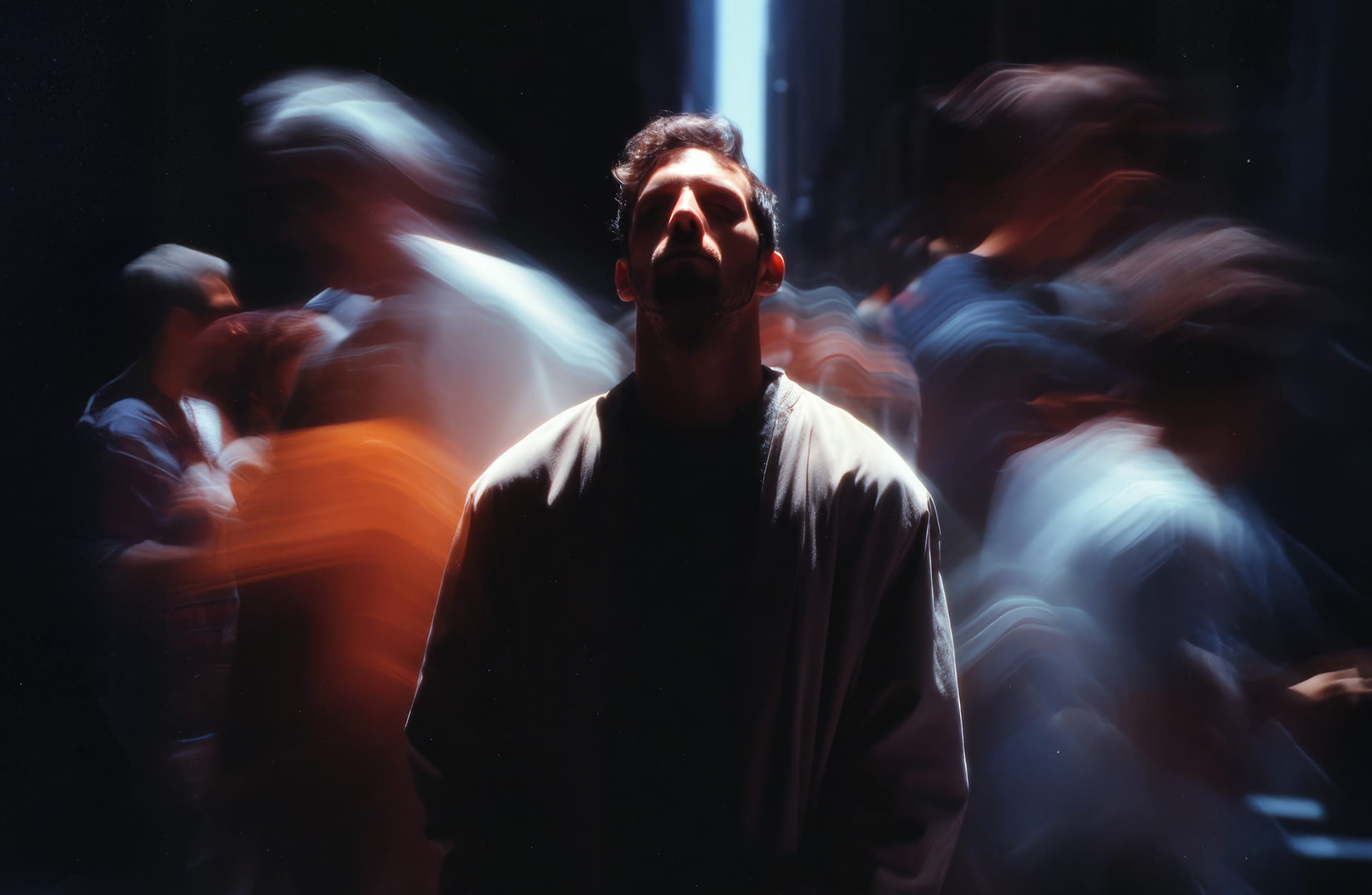
This is why attention theft is so important.
Because sustained attention is how internal geometry changes. Continuous presence is the solvent of conditioning. A mind that can hold still long enough begins to see its own programming. And the moment programming is seen, it begins to lose its authority. The mind ceases to be a pawn and becomes a witness. And a witness cannot be owned in the same way.
But there is another possibility that is even more disturbing: perhaps no one is hiding anything. Perhaps the universe is not conspiring. Perhaps the deception is a collaboration between external systems and internal fear. Because what people are being distracted from is not merely political awareness or consumer manipulation.
They are being distracted from the intensity of reality itself.
Silence is not empty. It is crowded with the truth of your life. The moment the noise stops, everything you have avoided rises: grief, meaning, mortality, longing, unresolved love, the question of why you exist at all. Most people are not prepared to meet themselves without mediation. The screen becomes a buffer between consciousness and its own depth. The feed becomes a drug that protects the ego from being dissolved by the vastness it cannot control.
So the theft of attention is not only imposed. It is accepted. It is chosen, again and again, because it is easier to live in a world of small stimuli than to face the terrifying magnitude of being.
And yet, something in the human being refuses to accept this as final.
Even the most distracted person sometimes experiences a rupture. A sunset that breaks the algorithm. A moment of grief that cannot be scrolled away. A night when sleep will not come because the soul, tired of being managed, starts speaking. An experience of nature so raw that it makes the mind briefly irrelevant. A sudden sense that life is too strange to be reduced to schedules and consumption.
Those ruptures are not accidents.
They are messages.
They suggest that there is another way to live: not by rejecting technology or society outright, but by refusing to let the structure of modern life define the structure of your mind.
By refusing to let constant stimulation become your default reality. By reclaiming the sacred dimension of attention.
Because attention is not just focus. It is devotion. It is the act of giving your reality-creating power to something.
Every moment you attend to something, you are saying: “This is worthy of existence in my world.” That is a metaphysical act. It is creation by selection. The modern environment tries to make you devote yourself to triviality so that the deeper layers of reality remain inaccessible, not because they are forbidden, but because you never build the inner silence required to perceive them.
In this light, the question of whether humans are being led to live wrongly becomes more nuanced. Yes, the average life is misaligned with depth, nature, and coherence. But it may also be precisely the terrain upon which the next stage of consciousness can be forged.
A consciousness that can unify itself without being sheltered. A consciousness that can remain vast inside the smallest boxes. A consciousness that can watch the screen without becoming the screen. A consciousness that can live in the city without forgetting the sky.
If the universe has a “higher force,” perhaps its desire is not to hide truth but to make it earnable. Not through suffering for its own sake, but through the maturation of perception. The truth is not withheld; it is gated by coherence. It becomes visible only to a mind that has ceased to be scattered. The deception is not a locked door. It is a fog. And the fog dissipates not through argument, but through the slow, disciplined reformation of attention.
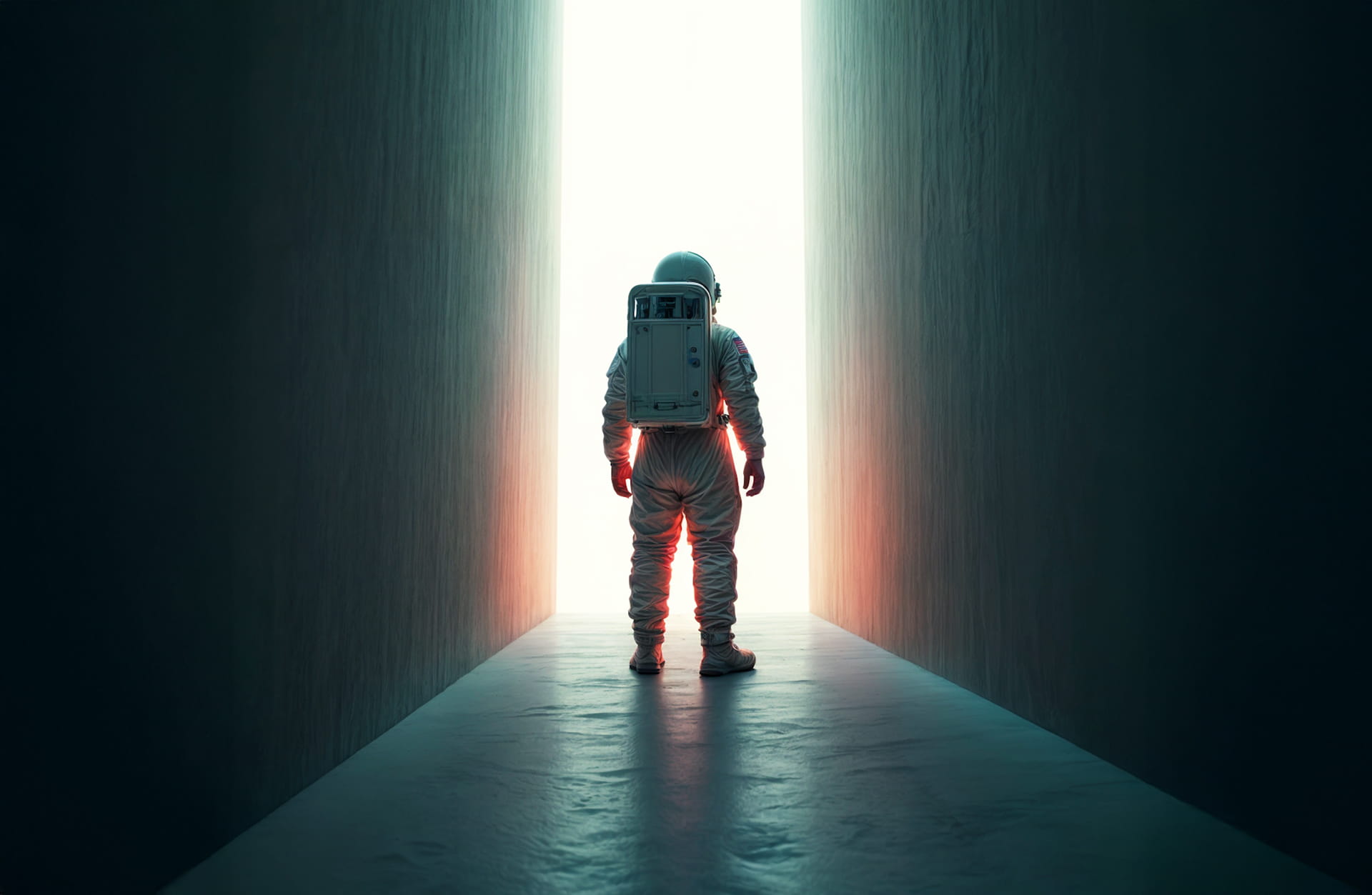
The hidden secret, then, is not a fact you learn. It is a state you become. And that state is not an escape from the world, but a deeper entry into it.
Because the ultimate deception is not that reality is distorted. Distortion is inevitable. The deception is that distortion is all there is.
The deeper reality is that beneath the fragmentation, beneath the noise, beneath the small boxes and their infinite bait, there is a vast continuity. A living field of interconnection. A coherence that does not need your belief, only your presence.
It has been there the entire time, patiently waiting for you to grow quiet enough to notice it.
And when you do, something changes that no system can fully control: the internal center returns. The mind stops being a marketplace and becomes a temple again. Not a religious temple, but a temple in the original sense: a space set apart for what is real.
Then the world is still the world, with its screens and its traps and its spam. But you no longer belong to it in the same way. You are no longer dragged by the smallest forces.
You become capable of holding the whole in a single gaze. And that may be the point. Not to destroy the labyrinth, but to walk through it awake.
Related products


Complete
nootropic essentials
Complete nootropic
essentials

Buy 2 Items | Get 10% Off.
$54 USD $45 USD


Precision
cognitive enhancer
Precision cognitive
enhancer
Buy 2 Items | Get 10% Off.
$99 USD $84 USD

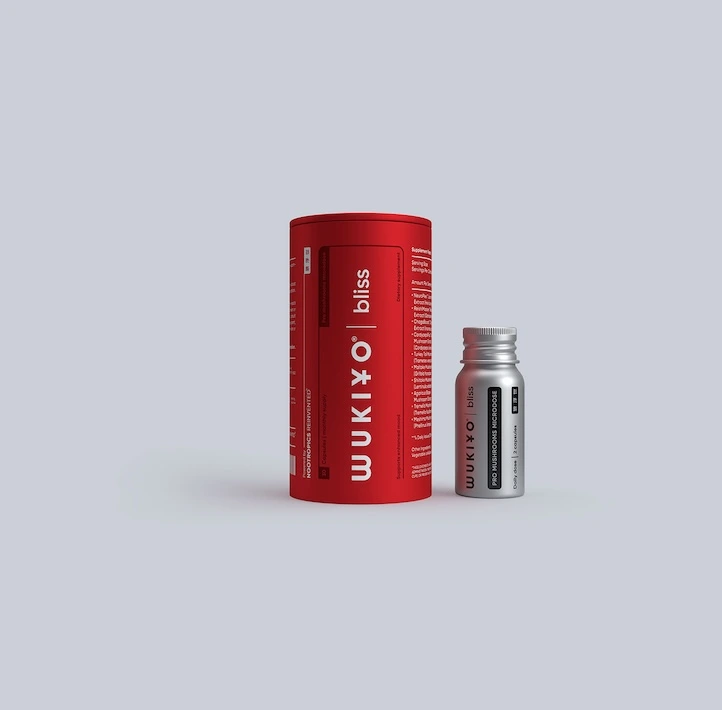
Pro
mushrooms microdose
Pro mushrooms
microdose
Buy 2 Items | Get 10% Off.
$99 USD $84 USD


Certified
superfood greens
Certified superfood
greens
Buy 2 Items | Get 10% Off.
$54 USD $45 USD


Comprehensive
wellness formula
Comprehensive wellness
formula
Buy 2 Items | Get 10% Off.
$81 USD $69 USD


Prime
longevity blend
Prime longevity
blend
Buy 2 Items | Get 10% Off.
$81 USD $69 USD

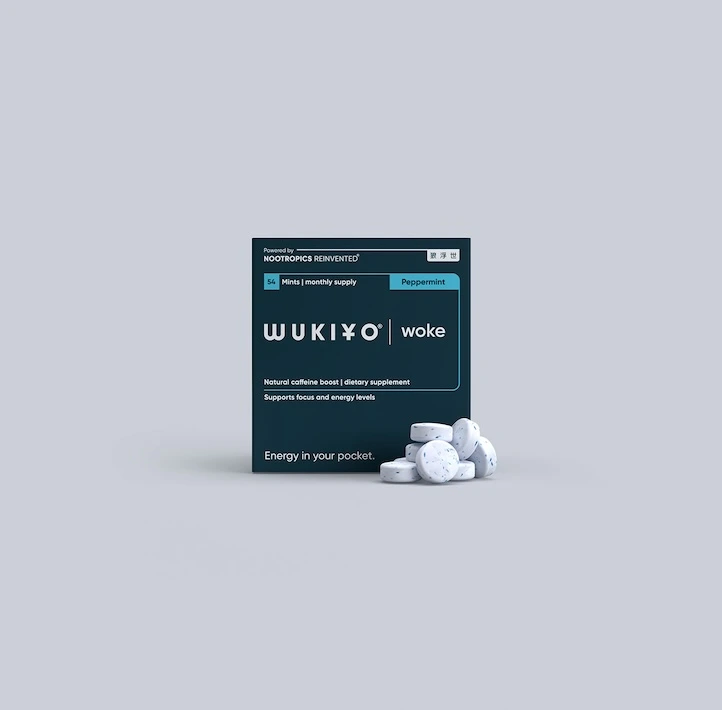
Natural
caffeine boost
Natural caffeine
boost
Buy 2 Items | Get 10% Off.
$36 USD $30 USD

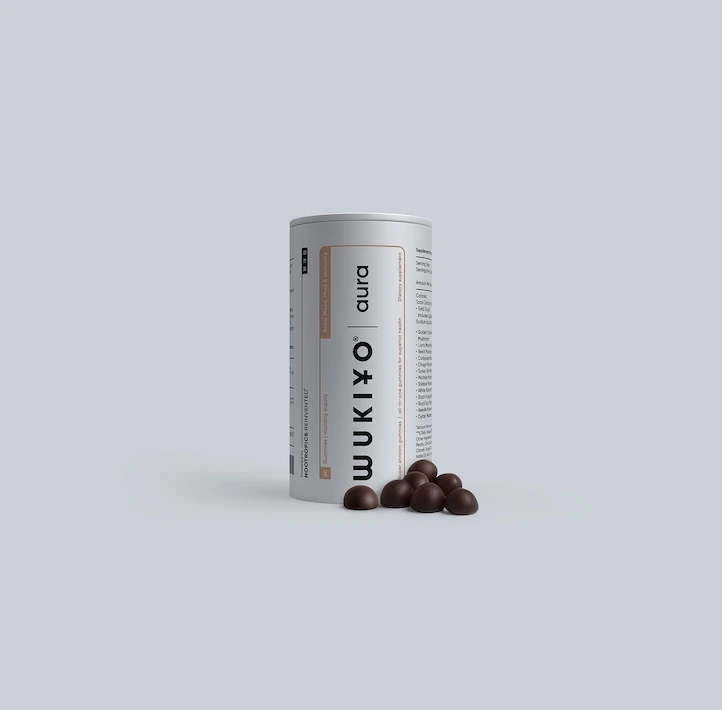
Super
shroom gummies
Super shroom
gummies
Buy 2 Items | Get 10% Off.
$57 USD $45 USD
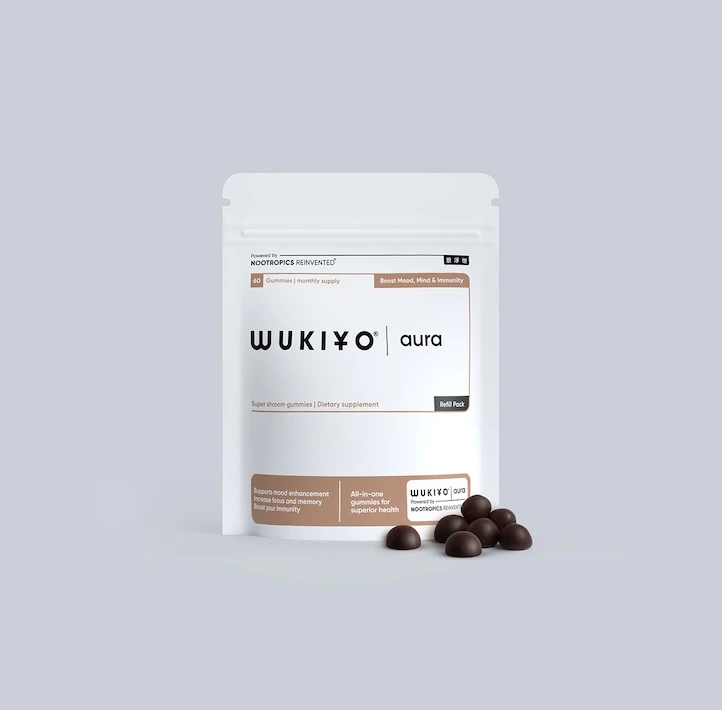
Refill Pack
Super
shroom gummies
Super shroom
gummies
Buy 2 Items | Get 10% Off.
$57 USD $45 USD


Instant
coffee + mushrooms
Instant coffee
+ mushrooms
Buy 2 Items | Get 10% Off.
$60 USD $42 USD


Limited
edition
Limited edition
Buy 2 Items | Get 10% Off.
$51 USD $45 USD
Other posts

June 29, 2026
The Dopamine Economy: Why Your Brain Is Being Auctioned Every Day

April 3, 2026
6 Years of Excellence: The Evolution of Focus in the Age of Noise

March 20, 2026
Peptides Are the Future of Performance. But the Future Requires Infrastructure.

March 13, 2026
Smart Drugs Do Not Make You Smarter. They Reduce Neural Friction.

March 6, 2026
The Glyphosate Panic, Alcohol, and the Real Neurotoxin We Ignore
February 27, 2026
The Era of Neuroarchitecture Has Begun

February 19, 2026
The Integrity of Attention

January 16, 2026
Unlocking Cognitive Evolution: The WUKIYO Blueprint for the Modern Mind
January 9, 2026
Spirulina: The Algae That Redefines Human Nutrition

January 2, 2026