







The Dopamine Economy: Why Your Brain Is Being Auctioned Every Day

Table of contents
Nobody wakes up in the morning and consciously decides to surrender their attention.
Yet billions of people do exactly that every day.
Before breakfast, many have already checked messages, scanned notifications, opened social media, watched short videos, read headlines, and consumed more information than previous generations might have encountered in an entire week. It happens so automatically that it rarely feels like a decision. It feels normal.
That may be the most remarkable part of all.
We are living through one of the largest neurological experiments in human history, and most participants do not realize they are involved.
The modern economy is no longer built solely on products, services, or information. Increasingly, it is built on attention. Every platform, application, advertisement, notification, and recommendation is competing for the same finite resource: your focus.
And the currency being used to acquire it is dopamine.

The Most Misunderstood Molecule in the Human Brain
Dopamine is often described as the brain’s pleasure chemical. The phrase appears in countless articles, podcasts, and social media posts.
The problem is that it is not entirely true.
From a neuroscientific perspective, dopamine has far less to do with pleasure than most people realize. Dopamine is the chemistry of pursuit. It drives curiosity, motivation, anticipation, and goal-directed behavior. It is the signal that tells your brain that something important may be just around the corner.
Long before smartphones existed, dopamine helped humans survive. It encouraged exploration, rewarded persistence, and motivated action. It helped hunters track prey, helped communities discover new resources, and reinforced behaviors that improved survival.
For hundreds of thousands of years, this system worked remarkably well.
Then technology discovered how to speak its language.
The Industrialization of Attention
Every refresh of a social feed contains uncertainty.
Every notification carries possibility.
Every swipe promises novelty.
Your brain never knows whether the next interaction will deliver validation, entertainment, outrage, excitement, opportunity, or social connection. That uncertainty is exactly what makes these systems so powerful.
Behavioral psychologists have understood this principle for decades. Unpredictable rewards create stronger behavioral reinforcement than predictable rewards. It is the same principle that made slot machines famous.
The reward itself is important.
The anticipation of the reward is even more powerful.
Modern technology companies did not invent this mechanism. They simply learned how to scale it globally.
For the first time in human history, billions of people interact daily with systems specifically optimized to maximize engagement. Behind every successful platform are teams of engineers, behavioral scientists, designers, and machine learning specialists continuously refining one objective:
Keep attention for a little longer.
One more click.
One more swipe.
One more minute.
Individually these moments appear insignificant. Collectively they shape the architecture of human behavior.

Why Everyone Feels Mentally Exhausted
Many people describe a strange modern fatigue.
They are not physically exhausted.
They are not necessarily overworked.
Yet they feel mentally depleted.
They struggle to read books for extended periods. Concentration feels fragile. Deep thinking becomes difficult. Silence feels uncomfortable. Moments of stillness are often interrupted by an almost automatic desire to reach for a screen.
This is not necessarily a failure of discipline.
It may be a consequence of adaptation.
The human nervous system evolved in environments where novelty was scarce. Today novelty is infinite.
The brain evolved in a world where information was limited. Today information is overwhelming.
The brain evolved within small communities. Today social comparison occurs on a planetary scale.
Our biology remains ancient.
Our environment does not.
The result is a growing mismatch between the nervous system we inherited and the world we created.

The Hidden Cost of Constant Stimulation
When dopamine pathways are activated continuously, the brain adapts.
This adaptation is not inherently good or bad. It is simply what the nervous system does.
The challenge is that excessive stimulation can alter our perception of normal rewards. Activities that once felt engaging may begin to feel dull. Reading requires greater effort. Focus feels harder to maintain. Meaningful projects struggle to compete against endless novelty.
This is where many people make a critical mistake.
They assume they have lost motivation.
In reality, they may have lost sensitivity to slower forms of reward.
The issue is not a lack of capability.
The issue is an environment saturated with competing stimuli.
Reclaiming Cognitive Ownership
The highest-performing individuals across business, athletics, science, and creative disciplines often share an unexpected characteristic.
They protect attention aggressively.
Not because they are naturally more disciplined.
Because they understand that attention is finite.
Every distraction carries a cost. Every unnecessary stimulus consumes cognitive resources. Every interruption fragments mental momentum.
Focus is not something that is created.
Focus is something that is protected.
This is one reason why growing numbers of people are becoming interested in practices that support cognitive resilience. Sleep optimization, meditation, strategic caffeine use, physical exercise, and evidence-based nootropics are increasingly being explored as tools for maintaining mental performance in an overstimulated world.
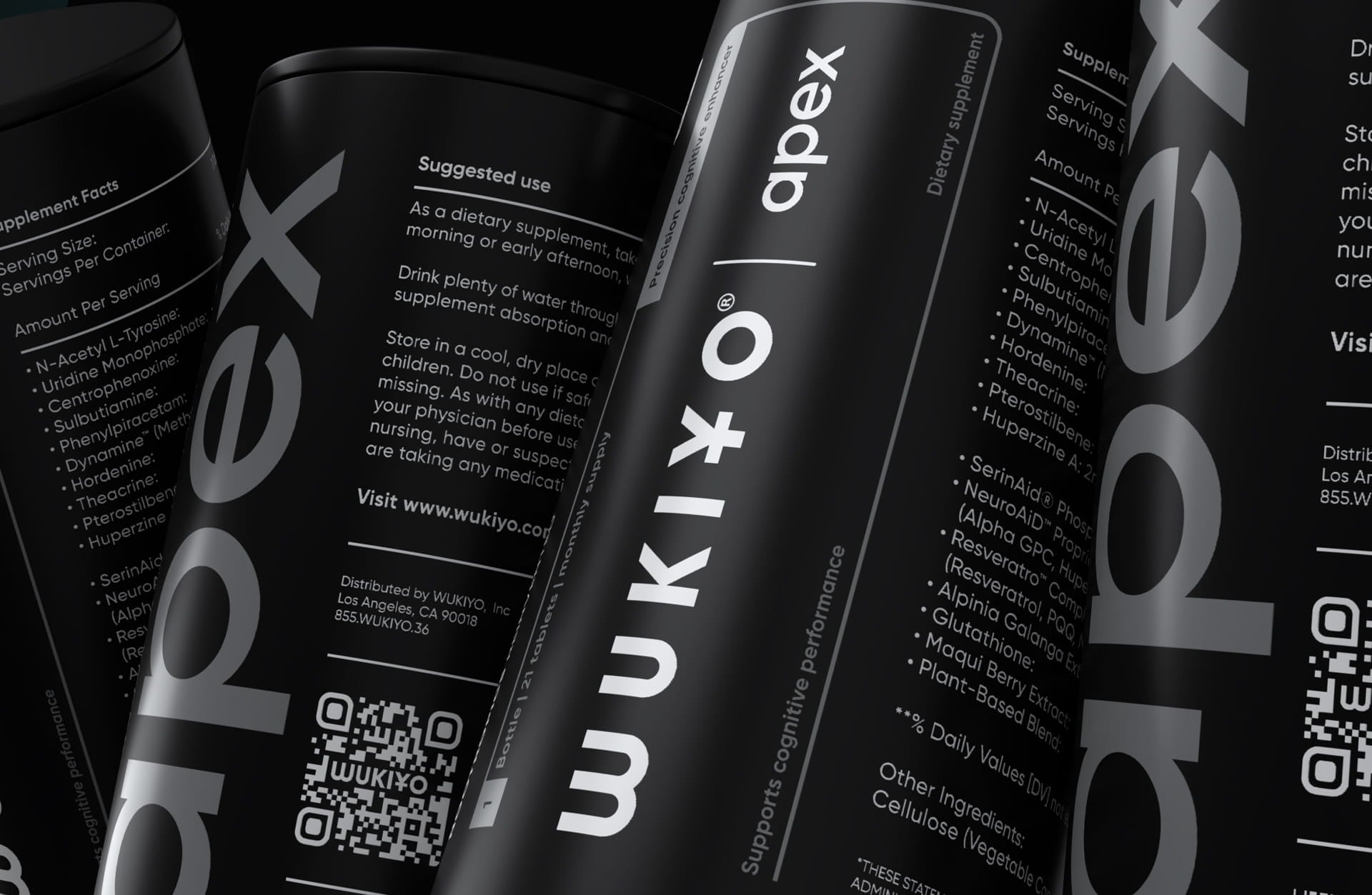
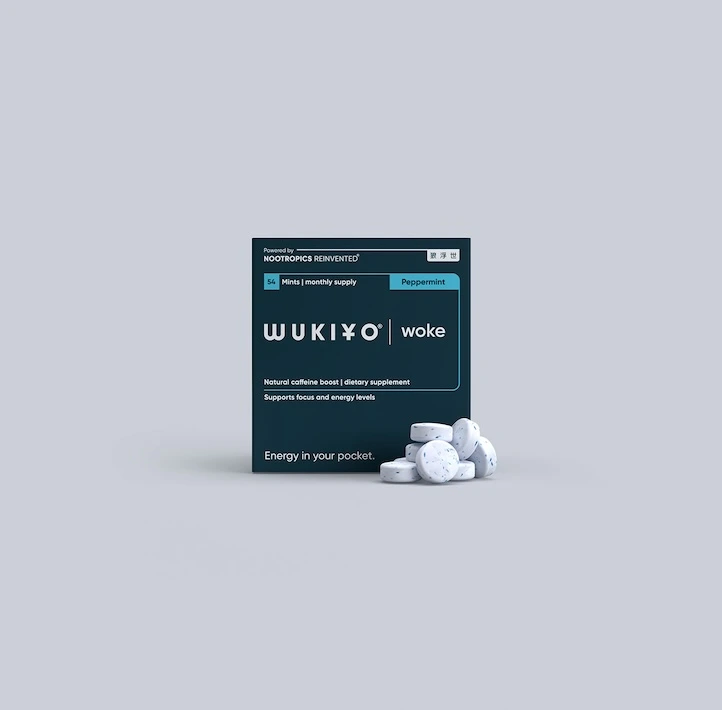
For example, many professionals turn to formulations such as WUKIYO | apex when seeking support for sustained cognitive performance during demanding work periods, while others utilize WUKIYO | woke as a cleaner approach to energy and alertness without relying on excessive stimulant consumption. These tools are not substitutes for healthy neurological habits, but they can complement a broader strategy focused on protecting cognitive capacity.
The foundation, however, remains unchanged.
No supplement can outperform an environment that continuously steals attention.
The Future Belongs to the Focused
As artificial intelligence accelerates and information becomes increasingly abundant, knowledge itself becomes less scarce.
Attention becomes more scarce.
The next decade may not belong to those who consume the most information. It may belong to those who can selectively ignore the majority of it.
In a world engineered for distraction, focus becomes a competitive advantage.
In a culture built around reaction, reflection becomes increasingly valuable.
And in an economy that profits from capturing attention, reclaiming ownership of your own mind becomes one of the most important acts of self-determination available.
The most valuable asset you possess is not money.
It is not time.
It is not even energy.
It is the mechanism through which all three are directed.
Attention.
Everything you build, learn, create, remember, and become depends on where it goes.
The future of human performance may ultimately depend on a simple question:
Who owns your dopamine?
Because whoever controls your attention increasingly controls the direction of your life.
Key Takeaways
• Dopamine is primarily responsible for motivation, anticipation, and pursuit rather than pleasure itself.
• Modern digital platforms are designed to maximize engagement by leveraging reward-seeking mechanisms within the brain.
• Constant exposure to novelty can reduce tolerance for deep focus and sustained attention.
• Many symptoms commonly described as brain fog or lack of motivation may partially stem from chronic cognitive overstimulation.
• Attention is becoming one of the most valuable resources in the modern economy.
• Protecting attention may be one of the most effective performance-enhancing strategies available.
• Nootropics, sleep, exercise, and mindfulness practices can support cognitive resilience, but none can replace control over where attention is invested.
Related products




Other posts

August 10, 2026
The Brain Was Never Built to Think. It Was Built to Predict.

July 27, 2026
The Energy Hypothesis: The Hidden Rule Behind Human Behavior, Perception, and the Future of Cognitive Freedom

July 20, 2026
The Mitochondrial Revolution: The Tiny Power Plants That May Determine Everything

July 13, 2026
The Night Shift of the Human Brain: What Happens While You Sleep Could Determine How Long You Live

July 6, 2026
Brain Fog Is Not a Diagnosis. It Is a Warning Signal

June 29, 2026
The Dopamine Economy: Why Your Brain Is Being Auctioned Every Day
April 3, 2026
6 Years of Excellence: The Evolution of Focus in the Age of Noise

March 20, 2026
Peptides Are the Future of Performance. But the Future Requires Infrastructure.

March 13, 2026
Smart Drugs Do Not Make You Smarter. They Reduce Neural Friction.

March 6, 2026